Showing posts with label Daily life. Show all posts

I am

A lazy morning after busy days that started early in the morning and finished late at night. Sitting in the hotel room in Goiania. I need to take shower and start getting ready for lunch at my friend Deo's home. Lucas, her grandson will come to pick me up in about an hour.

I am thinking of the small girl in Vila Esperança yesterday, who had asked Renata, "If he was born in India, why does he live in Italy?", clearly puzzled by the idea of leaving the place she has grown up in and loved so much, to go and live some where else.

Yesterday I also had a long talk with Pio, who had left his Armani suits and well paid job in Milan to come and live in Goias Velho, to start Vila Esperança, together with Max. That was 22 years ago. I am sure that lot of persons ask him, why did you leave Italy to come and live in Brazil? I didn't ask him that, but the idea that he could understand my feelings of mixed identities, made it easier to talk to him.

French-Libanese writer Amin Maalouf had written in "On Identity":

..someone comes and pats me on the shoulder and says "Of course, of course - but what do you really feel, deep down inside?"

For a long time I found this oft-repeated question amusing, but it no longer makes me smile. It seems to reflect a view of humanity which, though it is widespread, is also in my opinion dangerous. It presupposes that "deep down inside" everyone there is just one affiliation that really matters, a kind of "fundamental truth" about each individual, an "essence" determined once and for all at birth, never to change thereafter. As if the rest, all the rest - a person's whole journey through time as a free agent; the beliefs he acquires in the course of that journey; his own individual tastes, sensibilities and affinities; in short his life itself - counted for nothing. And when, as happens so often nowadays, our contemporaries are exhorted to "assert their identity", they are meant to seek within themselves that same alleged fundamental allegiance, which is often religious, national, racial or ethnic, and having located it they are supposed to flaunt it proudly in the face of others.

Anyone who claims a more complex identity is marginalised. But a young man born in France of Algerian parents clearly carries within him two different allegiances or "belongings", and he ought to be allowed to use both. For the sake of argument I refer to two "belongings", but in fact such a youth's personality is made up of many more ingredients. Within him, French, European and other western influences mingle with Arab, Berber, African, Muslim and other sources, whether with regard to language, beliefs, family relationships or to tastes in cooking and the arts. This represents an enriching and fertile experience if the young man in question feels free to live it fully - if he is encouraged to accept it in all its diversity. But it can be traumatic if whenever he claims to be French other people look on him as a traitor or renegade, and if every time he emphasises his ties with Algeria and its history, culture and religion he meets with incomprehension, mistrust or even outright hostility.

Amin Maalouf's words resonate with me. I was born in India and Hindi is my mother tongue. It is the language of all those books in papa's book shelf, that I had started reading as a kid. Nanak Singh, Kishen Chander, Rangey Raghav, Mohan Rakesh, Nirmal Varma .. It is the only language in which I can really appreciate poetry. It is the language of my childhood friends.

English is the language of my logic and reasoning. It is the language of discovering writers from different parts of the world. It is the language of my work. It is also the language that I am most comfortable in writing.

And I dream in Italian, the language in which I talk to my wife and son. Italian is the language I read most now. It is the language that I like using for talking to small babies and dogs and birds and trees.

But Brazilian Portuguese is also my language, as are bits and pieces of French and Chinese. They are all parts of me. Languages, people, friends, journeys, memories, experiences, all are part of me. That is what "I am", if I can borrow the title from Onir's film. My complex identity, that is not always so easy to explain.
So much hoo-ha about a drink?

Outlook has a long article on drinking and bars in India, and how the drinks culture has spread and changed in India over the past two liberalized decades. It made me think about differences in Indian and Italian attitudes towards alcoholic drinks.

I have a feeling that the attitudes towards social drinking in India are very much influenced by British-American attitudes towards alcohol. In the article in Outlook, Anvar Alikhan gives a list of characteristics of a good drinking place:
.. what exactly makes a good bar? It’s a complex, personal issue: what a 22-year-old girl would look for would naturally be different from what a 44-year-old male would want. However, certain basic, universal requirements generally apply, such as:

- First, a good drinks menu, with a sufficiently wide selection of good drinks, poured generously.
- There should be a great bartender. He doesn’t have to be a circus juggler, but he must be good at his job, able to mix interesting, innovative cocktails.
- Probably the single most important factor is that the crowd should belong to your “tribe”. Not necessarily people you know, but the kind of people you’d like to know. That’s what gives you a sense of belonging, and makes you want to come back here next time.
- The place must be 60 per cent full. Less than that and it’s uninvitingly empty; more than that and it’s too crowded.
- The service must be efficient, anticipative and unobtrusive. You shouldn’t have to keep waving out for a waiter.
- The music must be interesting, with a mix of familiarity and slight surprise. And the volume must be just right: not so loud that you can’t figure out what your companions are trying to say.
- Great lighting can make a huge difference to any bar.
- Comfortable chairs. Un-ergonomic furniture soon becomes a pain.
- The prices can be premium, but they should never leave you with a feeling of being ripped off.
- A distinctive character, a sense of history, or even a slight eccentricity always adds something special to a bar.
- Ultimately, no bar ever attains perfection. And if it did, it probably wouldn’t be any good anymore. Some small imperfection is always interesting.
My attitudes towards bars and social drinking are obviously influenced by my living in Italy, the original bar country, where there are bars at every corner and where in some areas, small kids, especially in rural areas, get to taste few spoons of wine from a very tender age, and where there are often discussions on nutritional values of wines and local liquers.

In Italy, when people want to go to a bar, they usually go to the one closer to their homes or their work places, or on the way from the home to the work-place, especially where it is easy to find a parking. Here, people go to the bar throughout the day - in the morning for a cup of coffee and a cornetto for breakfast, for another cup of coffee around mid-morning, for a sandwich for lunch or dinner. In all these occasions, some people will also ask for wine or other drink. Some times, usually in winter, some will ask for a drop of Grappa, the Italian grape liquer, in their coffee. So I feel that the relationships with the bars are very different from the ones described above by Alikhan, it is much more familiar.

Thus even attitudes towards drinking are quite matter of fact, and I have never heard of persons talking of good bars and bad bars. May be they talk of clean or dirty bars, or, they talk of friendly and unfriendly barmen/women.

The main differences between Italian attitudes and Indian (and British) attitudes towards drinking seem to be that in Italy, most persons drink wines every day with dinner, and on weekends and holidays, also during lunch. If you are invited by friends to lunch/dinner, you will get offered invariably some light appettizer drinks, then have some good wine with food and then finally have a selection of liquers for after-dinner drinks, that will usually end with a "digestive", that is a bitter tasting liquer with some herbs in it.

In a bar, in the evening, if you are with friends, you can try some exotic looking cocktail, for some social drinking. I think that women go more for this kind of drinking.

Beer drinking is not so common in Italy. Younger people drink it more. Some times, especially on hot days, people will offer you a bottle or can of beer, or you will order beer for drinking with your pizza. But most drinking is done with food or after-food and focuses on wines. I have also not seen persons drinking umpteen bottles of beer to get drunk, like it happens in Africa.

You hardly ever mix water or or soda or even ice in the hard liquers in Italy. I have yet to meet someone here who starts his drinks every evening, before dinner, with two or three pegs of hard liquer, usually whiskey, mixed with water/soda, accompanied by some snacks, that is so ubiquitous in India.

Most important difference in the attitudes towards alcoholic drinks between Italy and India, seems to be the aura of something bad or prohibited that surrounds drinking in India, in spite of the liberalization and changing attitudes in the recent years. The peripheries of cities like Bangalore, are full of seedy looking, dirty and ill-lit drinking joints, where you "hide" to drink. While in Italy, it is more of a common pleasure of life, taken for granted, sips offered to children and to growing up adolescents much like tea in India, and at the same time, that avoids hard drinking.

I have been fortunate with drinks, because invariably the first glass of anything remotely alcoholic is enough to make me sleepy, so usually I tend to avoid drinks. Having half a glass of red wine is usually enough for me! Drnking also makes me more melancholic and introverted. For me, a good bar will be where it is not too crowded, that has no loud music so that people can talk and that does not allow smoking.

Every country has its drink-culture and probably our colonial pasts mixing up with our specific cultural backgrounds, do influence those drinking-cultures. The Mongolian way of seriouly drinking vodka on every occasion or the Caribbean way of having rum or the German love for beer, are very different from the drinking cultures in India and Italy.

However, I think that I need to remember the Indian habits towards drinking when we have guests from India. This means that I must make sure to have whiskey, soda, ice, snacks, etc. and offer it for pre-dinner drinks. I usually forget it and I don't think that our Indian guests appreciate the Italian way of having some light appettizer, wine with food and an offer of post-dinner drinks or digestives!

Usually for an evening with friends, I would prefer to be with at home. We have a good selection of liquers from different countries. This way, no body tries to insist and force me to drink anything and at the end, I usually drink some wine and may be some digestive. And, best of all, after the evening is over I can go straight to sleep!

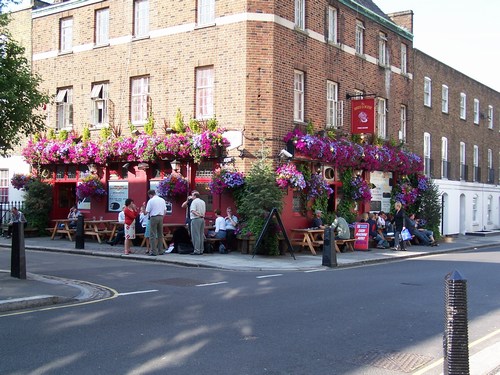
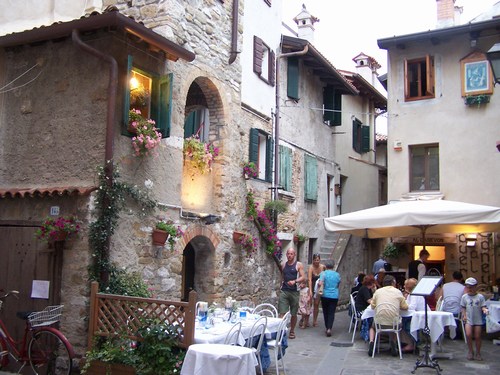
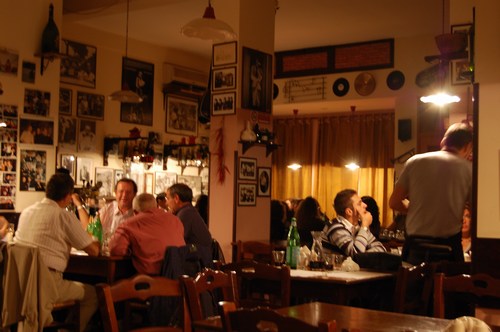
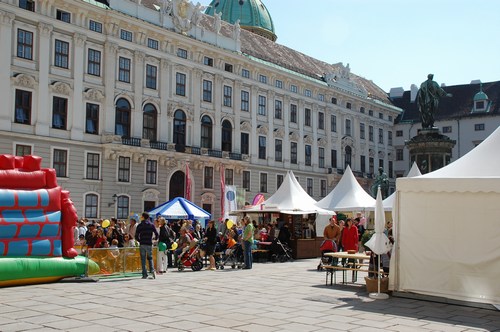
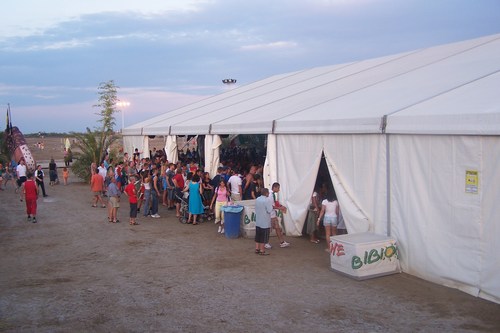
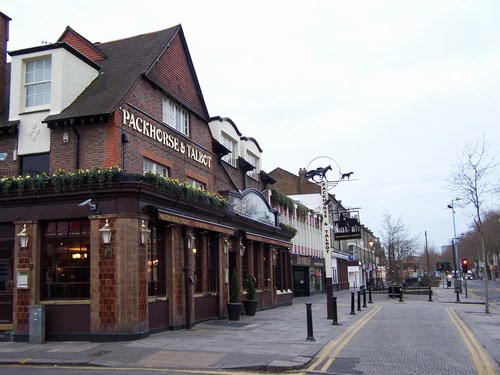
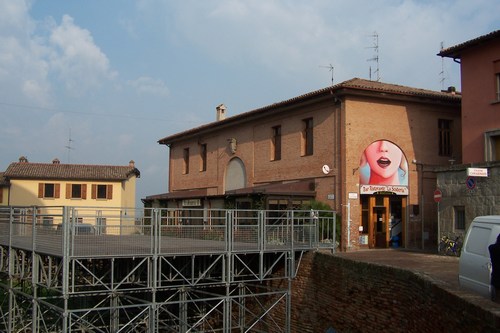
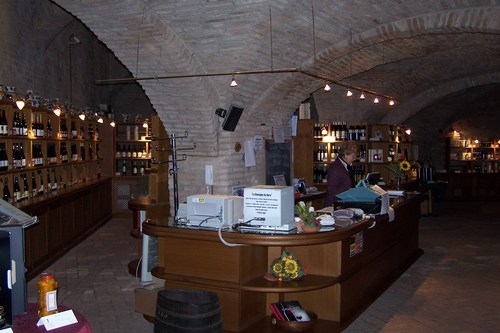
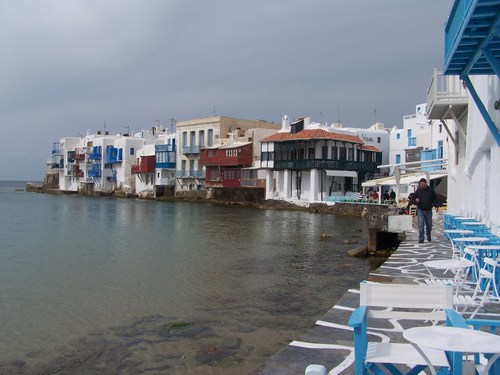
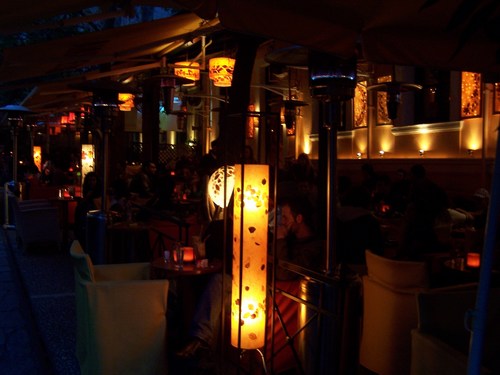
To conclude this discussion on drinks and bars, here are some of my pictures of pubs, bars, bar-restaurants from different countries of Europe:

Having a drink in Europe - pubs and bars

The two Nigerias

There are two Nigerias in my mind.

One Nigeria has a big image problem. It is the land of repressive regimes and corruption. I didn’t even want to go to Nigeria and had tried my best to get out this visit.

The list of negative things about Nigeria seems unending. Long time ago I had heard stories about corruption in Nigeria. Then I had heard about the problems between Christians and Muslims and the decisions of Shariat Islamic courts that had mobilized the public opinion in the West. In Italy, there has also been a lot of publicity about Nigerian sex workers, and every time there is some story in Italian newspapers about sex workers on the streets, they invariably talk of Nigerians. Then over past few years, all kinds of email scams are attributed to Nigerians.

Yet, there is another Nigeria in my mind. I admire Nigerian writers like Ken Saro Wiwa and Chimamanda Ngozi Adochie. Thinking of the way Yoruba cultures have survived and grown in south and central Americas, I feel that Nigerian cultures must be among the richest cultures that developed in ancient world, though I do not know much about them. I think that in present day Africa, together with South Africa and Ghana, Nigeria has the most vibrant thinkers and philosophers (though I agree that probably there is an anglophone bias there in such thoughts).
***

The first look of the green mountains and hills surrounding Abuja as the airplane was preparing to land, was very nice. The airport was small for the capital of one of the most powerful African nations, but it was nice and clean. However, I was surprised by the insistent immigration officer, wanting all details of why I had come to their country.

Getting visa for Nigeria was no easy thing. I had to fill an online form, send all kinds of proofs and letters to justify my visit to the embassy and I was told, if they wish, I will have to go to Rome to their embassy for an interview. For all this process, it needed at least one month to get the visa. All this for going there for a five days conference organised by their Government!

After such a tough process for getting a visa, I was not expecting all the questioning at the airport. After the immigration, even custom officers wanted to know why I had come to Nigeria and how long I was going to stay. It was as if Nigeria does not want any kind of tourists or curious persons to come here, and all visitors are given this message.

Getting out of the airport, there was another surprise, more pleasant one this time. There were no anxious taxi drivers trying to rip me off, running after me. The person who was supposed to pick me from the airport was no where to be seen and I had walked to the taxi stand but there were no taxis waiting there for passengers. It was another sign that tourists and visitors without connections in Nigeria are not so many.

Anyway, soon a man came to ask if I was looking for a taxi and I could come to the hotel. The city of Abuja looked very nice with greenery, wide roads and many new shining buildings. The people were very nice, courteous. Going around seemed to be completely safe. In our international meeting, there were many Nigerians and it was a pleasure to make new friends, to talk to new persons, to discover their ideas and know about their work in different parts of Nigeria. Even the lady from the north, with her head covered, who had refused to shake hands with me, was not shy to argue about her ideas.
***

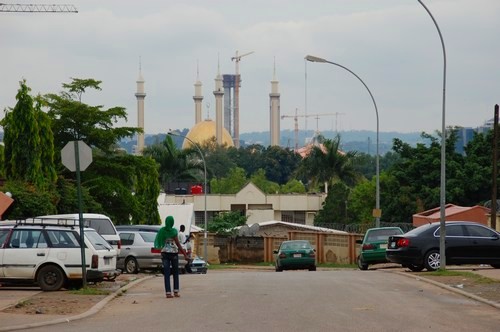
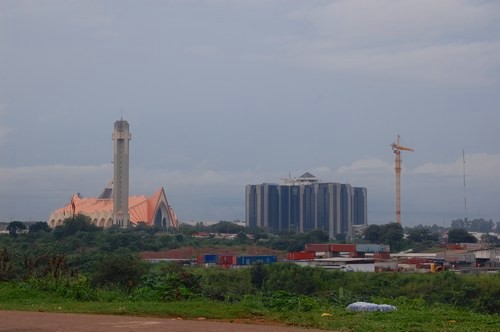
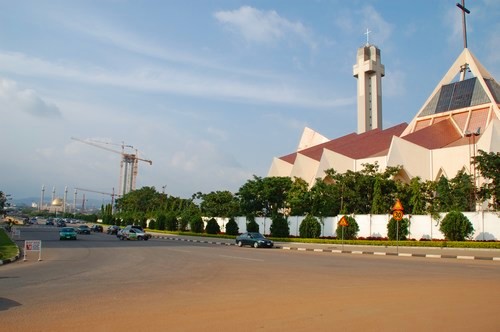
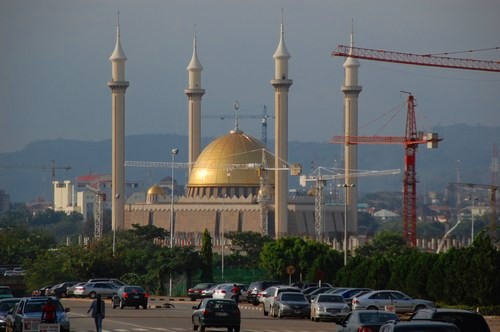
First three days were busy in the meetings, though I did try to click a few pictures from the taxi, while going from one place to another. Finally on the third day, I found some time to walk near the conference centre, which was not far from the cathedral of Abuja and from where, you can have a nice view of the beautiful golden domed mosque of Abuja.

I had just clicked a couple of pictures, when a man appeared, very angry, shouting at me. "Do you have permission to take pictures? Is it possible in your country to go around and take pictures like this?"

I was surprised. I couldn’t believe that taking pictures in Nigeria could be illegal and you need a permission to take pictures! The man apparently was convinced that all countries in the world have this rule and didn’t believe me when I told that I had always taken pictures in whichever country I went. My answers made him angrier, and soon things turned serious. He will call some special police called SSP or something like that, he told me, threatening that I will be put in jail and that my ignorance of the country’s laws was no justification for the crime I had committed.

Suddenly I was a little afraid. Their special police sounded like the Nazi SS. I quickly explained to him that I was there for an important meeting, I was invited by United Nations and Government of Nigeria, that later in the day I was going to speak in front of the first lady of Nigeria. That finally stopped him. How many pictures have you taken, he asked me. Just one picture of the cathedral, I told him meekly, trying to sound sorry for this serious crime.

"OK, go back straight to your meeting, I don’t want to see you around here", he glowered. And I walked back to the meeting with my tail firmly tucked between my legs.

Later in the meeting I asked one of the security persons preparing for the visit of the first lady, if I could take her pictures. He had smiled at me, “Yes of course. You can take as many pictures as you want. And don’t stay closed inside this meeting hall, our city is beautiful, go out and see some of its beauty.” I didn’t ask him if I could take pictures of their beautiful city or if I needed to apply to someone for permission!

I think that rules prohibiting photography on the street in todays' age are stupid. If I really want, I just need to fiddle with my mobile telephone and take as many pictures as I want. People with mobile phones are everywhere, even in Nigeria and I don’t think that security men in Nigeria can check and control each of them to see if they are really talking on telephone or taking pictures. Terrorist won’t come with fancy cameras to take pictures of cathedrals and mosques from different angles.

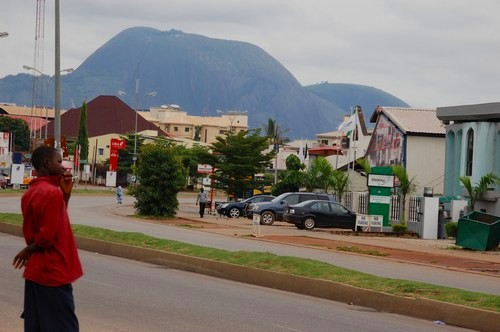
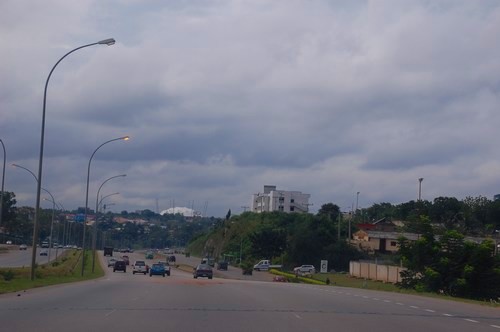
Abuja, Nigeria

Abuja, Nigeria

Abuja, Nigeria

Abuja, Nigeria

Abuja, Nigeria

Abuja, Nigeria

***

The minister for Women's Affairs, Ms. Iyom Josephine Anenih came to the meeting. I was impressed with her, since she seemed to know what she was talking about and had actually listened to the persons speaking before her.

Nigeria's first lady Dame Patience Goodluck Jonathan was supposed to inaugurate the meeting but she couldn't come. After a few hours, a group of wives arrived for the inauguration, including wives of head of senate, wife of head of defence services, etc. but the first lady was not there. It was a bit surprising to hear that the first lady had been ready for hours waiting for the permission "from the Council" for coming to our meeting but she didn't get the permission!

A first lady needs to get a permission from a Council (was it an euphemism for her husband, the President?) to come to a meeting to inaugurate it?

In the evening, the Minister insisted to send her car to take us to the airport. Her car was accompanied by a police car with sirens and flashing lights. It was the first time, I was travelling like that. Needless show-offs, I had thought. However, the night traffic on the road going to the airport was terrible in many places, jam packed with cars, people eating or buying things from roadside markets. Without the Minister's car, probably we wouldn't have made it to the airport in time!
***

The ancient cultures of Nigeria, the Yoruban myths and stories, have they survived in today's Nigeria? The country seems divided among evangelical churches and islam, and I have no idea if the ancient religions have any relevance in today's Nigeria. The question came to my mind many times but I had no opportunity to ask it to someone.

***

Nigerian email hackers have souls

Tomorrow morning I am leaving for Nigeria. I was wondering if I should take my laptop with me or if it was better to leave it at home? In my mind, Nigeria is full of hackers who can steal things effortlessly from your computers just by looking at it! Then I received an email and it changed the way I look at Nigeria and Nigerians.

Yesterday I received a "different" spam message from alicesary2(at)gmail.com. It made me aware about the tough jobs poor email hackers in Nigeria have to do. Sending countless emails to people who don't believe in their crying stories, about being stranded in foreign lands needing emergency money or widows of millionnaires wishing your help in getting at their millions, must be tough and job-satisfaction must be low, apart from pangs of guilty-consciousness for duping poor sods who believe in fairy tales.

OK guys, next time I put your message in the dump-box, I won't curse you, I will smile and think about your tough lives! Here is the message:

Hello Dear,
Since you aren't falling for my African romance scam, let me be up front with you. Because I am actually a Nigerian man, you owe me something.  I am entitled to reparations from the rest of the world, including you, due to the misdeeds of my forefathers who sold their family members and neighbors into slavery.
I am also entitled to handouts since my nation is rife with corruption and graft and has no hope of ever creating a decent civilization for itself.  Since you have not sufficiently helped us, that is your fault, not ours.
Most of all, you owe me for all of your unfounded prejudice against us.So start paying up now, by Western Union.  I will accept $12,000 USD from you over a one year period in monthly installments of $1000 USD.
Otherwise I will emigrate to your country and never cease to be a social problem for you.  A word to the wise is sufficient.
Regards,
"Alice Sary", as good a name as any

Children of mixed gods

Yesterday, I was at the presentation of Fatima Ahmad's new book "Aukui". Fatima's mother was half Indian and half Vietnamese, her father was Somali. Fatima was born in Cambodia, where she lived for the first 21 years of her life, till the war broke out and they were forced to migrate to Somalia.

In Somalia, Fatima faced the more orthodox side of her religion. She was not supposed to go out, not to talk to men. It was different to grow up as a Msulim in Cambodia, a predominently Buddhist country than in Somalia. After three years in Somalia, Fatima moved to Italy. (In the picture below, during a reading from her book - Fatima is in the middle)

Fatima Ahmad, Roberta Sangiorgi from Eks&Tra & Stefano at Casa Khoula library Bologna

"Aukui" means "black devil" in Cambodian and refers to the difficulties she faced in Cambodia because of her skin colour. She also had to overcome barriers created around her disability. She said that she has written this book to tell her story to her younger brothers and sisters, who were born later and do not know about their roots. About her religious beliefs, Fatima said that she takes what she likes from Islam, Buddhism and Catholicism.

Discussions about mixing of faiths and religions immediately resonate in me. In my family, we have three religions - Hinduism, Catholicism and Sikhism.

I think that with globalisation, with people moving from one country to another, there will be even more opportunities for people of different religions to meet, fall in love and make families. I also think that today, with greater awareness about ideas of human rights and religious liberalism, there are greater opportunities for people in mixed families like ours to maintain our distinct religious identities and yet be all together in harmony.

A couple of months ago, I was in Vietnam and one evening, I had a discussion with a friend, who is Buddhist and has married to a Catholic. They are planning to shift to Italy in a couple of years. "I continue to be Buddhist", she had said. I had thought that in her words, there was an unexpressed anxiety about shifting to a predominently Catholic country and yet, continuing to be a Buddhist.

"And the children of such mixed families, what about their religion?", sometimes people ask me. I don't know how did others deal with this, I can only share how we dealt with it. For us, all children have a right to their family traditions from both the sides, mothers' and fathers' sides. This means that children should be able to feel at home in all their family religions, should participate in all their religious traditions and rites. We had had a church wedding and a hindu wedding, our son had his baptism and his mundan.

It is true that sometimes religions have prayers that talk about supremacy of their god and being the only true religion, but I think that if children can understand that their parents are in peace with each other, they grow up with their own understanding of their religions.

I feel that these children growing with shared understanding and beliefs of different religions, will be the new citizens of the world. I also feel this understanding is precious and should be valued and nurtured.

In India, because we grow up with different religions around us, over the centuries we have developed so many examples of mixing up of religions and traditions. Between Islam, Hinduism, Sikhism, Jainism, Christianity, etc.

Once I had read about one of the first Indian censuses done during British times and how people had difficulty in telling their religions, they were not sure if they should call themselves sikhs or hindus, and were forced to decide. Over the past decades, growing ideas of religious orthodoxy and fundamentalism among all the different relgions, seem to strengthen the differences, the divisions and the boundaries between religions and beliefs.

We, the children of mixed gods need to counter this and ask for respect of our religions, our mixed religions.

I have been reading debates about Indian census and if we it should ask questions about the castes or not. I wish that Indian census would also ask about religions of persons and give them the possibility of giving multiple answers - we can also be Hindus and Muslims at the same time, Sikhs and Jains at the same time, Hindus and Sikhs and Parsi at the same time. I wish there is a question that asks, how many believe that there is just one god for all human beings not withstanding their different religions? and how many of us also pray in religious places of other religions?

In India

It was the first time that I came through Bangalore. We were going to have a regional meeting on traditional medicine. The arrival hall of Bangalore international airport was a shock. Though the Delhi international airport is quite a let down but Bangalore was even worse. All the thoughts about Bangalore being the silicon valley of India and an international symbol of the new resurgent India seem like a joke when you arrive in that airport. They are building a new airport I was told but a city that hosts the new infotech giants seems to be taking a rather long time in getting its act together!

Outside, the narrow streets of Bangalore choking with traffic and blaring horns and unfinished fly-over close to the airport is in sharp contrast with its bright shops selling top international brands. We were staying on Brigade road off the famous MG Road. The row of shops selling computers and latest infotech gadgets, and the swanky malls seem out of the first world, squeezed in the third world of old poor India. Below is a view of Brigade road.

The traditional medicine meeting organised in collaboration with People's International Health University and Ayurvedic medical college of Bangalore had participants from Nepal, Bangladesh, Sri Lanka and Nepal. It was very interesting and provided an opportunity for reflecting on the dominance of western thought that relegates everything else to "old, traditional, indigenous". That ancient wisdom of milleniums that have resulted in systems of medicines like ayurveda, yunnani and sidha, are forced to "prove" themselves "scientifically" is a sign of that dominance. The picture below is from a visit to the Ayurvedic medical college of Bangalore.

Naturally we found time to go around the city for some tourist visit. The old palace of Tipu sultan completed in 1791 is beautiful with its dark browns and mahagony.

On the last day, on my way to the airport, Krishna, our driver, insisted on taking me to the Shiv temple next to the Kids Kemp shopping centre. The giant statues of Ganesh and Shiv in this temple are very imposing.

Visiting Bangalore was also an opporunity to visit family - Bukul, her husband Tony and their daughter, Ariel, as can be seen from the two pictures below.


On 19th, I flew to delhi. I had some work but mostly these days in Delhi are for family reunions. Kuldip ji and Manjit ji, our daughter in law, Atam's parents came to Delhi especially to meet me.

In Delhi, my joy is Mika, my young niece. I love spending hours with her. In the picture below, Mika is getting ready for a school function.

Delhi is the new home of Luca and his wife Polly. Luca is my old friend Enrico's son and has come here recently. So it was natural that to visit him and to check if everything was ok for their settling down.

Om Thanvi, editor of the Hindi newspaper Jansatta invited me to his home for a party, introducing me to his other guests as "he runs a webzine call Kalpana". Surrounded by his literary friends, I felt as if I was playing a new role, used as I am to be seen as a doctor! It was a lovely evening with wonderful Rajasthani vegetarian food cooked by his wife Premlata. In the pictures below Om with a small part of his huge DVD collection and two of the guests (Renuka Vishwanathan and Madhu Kishwar).


Finally I saw the new central park in Connaught Place. The new metro station of Rajiv Chowk has been completed and all the "work in progress" boards have been taken off, replaced by green lawns and flowing water. There was a beautiful exhibition showing off the changes in C.P.

Ragging lessons

There are broadly two kinds of persons in the world, I thought to myself. Those who live surrounded by transparent shells and life’s woes seem to touch them lightly, leaving them to live in their blissful ignorance, and those filled with angst, their sensibilities weighed down by the injustice of it all, every experience leaving a burning hole in their souls. Probably Sujit Saraf belongs to that second group, I thought to myself, as I read his article on Tehleka about effects of ragging he received at IIT Delhi twenty years ago.

Actually his description of ragging is quite funny:

We did many things in that one month that now appear harmless and amusing. We stood on benches in the dining hall and recited the national anthem; we crawled on all fours and barked like dogs; we brought cigarettes and Campa Cola for our seniors; we cleaned their rooms; we dropped our trousers so they could measure our penises; we formed human trains — each car holding the penis of the car in front — and whistled our way through hostel corridors; we simulated orgies; stripped naked; then wore underpants over our trousers to turn ourselves into comic book phantoms.
The impact of these experiences are summed up by Sujit as, “After so many years, I can list all these forms of ‘ragging’ dispassionately, but no one should be misled. Brutality and oppression remain just that, no matter the name used for them… Ragging is a case study for Freud, nothing more.”

If Sujit belongs to the second group, I probably belong to the first. While he seems to have been traumatised by that experience, his words brought back many happy memories for me.

The first time I encountered ragging was when I went to submit some form at MAMC near Delhi Gate. A pimply seventeen, I was suddenly pulled into a small door at the side of their auditorium. Soon my pants were around my ankles and I was asked to wank. It was slightly embarrassing to admit but I didn’t know what wanking meant!

I knew the words all right, they were used often by boys, but I had no idea that you actually did something. Probably I was too busy day-dreaming or reading or playing, and though it had been many years that I had “wet dreams”, I hadn’t ever thought much more about it. I did have some vague basic ideas of what fucking entailed and that was my sex knowledge. I don't think that I thought kissing caused a women to become pregnant, but probably I was not so sure about it.

My raggers screwed up their noses but were not too surprised, apparently they had seen other ignorant boys like me before? Any way, I was shown the simple practicality of wanking and let off. I won’t bore you with the details of my experiments with that knowledge later that day, but just for that lesson alone, the word “ragging” brings a smile to my face.

The other lesson came in Meerut a few months later, in the hostel. Fifty or sixty boys, running around naked and doing hundred little things like the ones described by Sujit above, was an opportunity for close observation of the variations in that small appendage that is apparently supposed to the centre of men’s lives – the penis. It was the best cure possible for all those anxieties about is it too small, is it too long, is too thin or thick or whatever, that seems to afflict many of us. It did cure me of those anxieties any way. After the first two times of being naked with other boys, any sense of humiliation or shyness disappeared.

It was fun and a way to look at things that earlier, I didn't have the courage to ask or think about.

The third lesson was about female sexuality. Fed mainly on Hindi literature, where sex is hardly ever mentioned directly, I had an idea that sex was something pleasurable for men that was “tolerated or suffered” by women. Both, male and female students of the medical college had their “anthems” full of obscenities, and it was the women’s anthem that opened the magic door for me – sex could be something desired even by women!

Probably I can come up with some more lessons that I received from ragging that perhaps today’s generation won’t care about. I am sure that today’s twelve year old knows much more about sex than what I knew at seventeen. If they don’t know, perhaps internet is better medium to learn than other guys slightly older than them through ragging? I am not hundred percent convinced.

My parents never spoke to me about sex and with friends, one spoke about it but that was more to experiment with words and our developing identities as men, but at least, I was shy about asking any real questions. Years later, when I tried speaking about sex to my teenage son, I soon realised that he already knew much more about it and probably I could have learned somethings from him! How times have changed.

I know that some persons were really traumatised by that experience. One of our classmates, she left the medical college and went back to Delhi to join some other course. Yet, for me the memories are only pleasant.

In the end, perhaps it all depends upon how we react to situations or how we look at them?

****
Do you feel uncomfortable with the word "fucking"? Try listening to explanations of Acharya/Bhagwan Rajneesh about this word at Gotham Chopra's blog that will cure you. On second thoughts, if you have high blood pressure and you feel strongly about this word, then don't listen to that podcast, probably you will burst some artery in your head!

Contradictions

After a lazy sunday afternoon nap, we decided to watch Syriana. I was still a bit sleepy and I had been hoping for something not too complicated, so probably some bits of Syriana passed over my head without registering. The film is complicated with different simultaneous and parallel story lines spread over different continents and different languages, English, Farsi, Arabic and Urdu. The main aim of the film is to show how American multinationals involved in petrol with active support from different American institutions are willing to go to any length to keep on their profits, including assassination of those who try to fight against their power. At the same time, short term thinking of USA forces sometimes provide sophisticated weapons to those who later use them against American interests.

I was thinking of how so many Indian films are now equally vehement in showing nexus between corrupt politicians, underworld and other corrupted state institutions.

It is a victory of freedom of press if cinema can show such realities in so clear terms, pointing accusing fingers at the powers. Yet, the fact that films like these can be done time and again and in spite of all the accusations, that do seem believable, nothing changes. Voters go on electing same persons, those same persons keep on doing what they were doing and public does not care. Then periodically there will be some ritualistic cleaning with some weakened power brokers who are sacrificed to satisfy the public hunger for justice and everything can continue as it was. It sounds very horrible and cynical and yet probably an accurate description of how "real" life is.

Coming back to Syriana, George Clooney must be passing though that "I am not just a beautiful body, I am a good actor" phase. It does seem unbelievable, his perplexity and confusion, after being a secret agent for all his life in places like Beirut. The decision of Pakistani boys to be suicide bombers is also not explained properly since at least one of them is not convinced about religious dope peddled by his instructors.
*****

I always had an admiration for Isreal. There was a long time that I was convinced of having been a jew in a previous life, who had lost his life in the holocaust. And I am deeply distrustful of religious fundamentalism of the islamic kind. Yet, in the fight between Isrealis and Palestinians or Lebanese, I feel that Isreal is renegating its legacy of suffering and is behaving similar to the oppressive forces in nazi Germany, uncaring about the countless civilians that its forces seem to crush with uncaring abandon. Probably this is because the fight is not perceived as between jews and muslims but is seen as unequal between uncaring powerful isrealis and desperate palestinians.

I find deeply distasteful the idea of covering women in dark long veils, hiding them from the public eye and yet I love old muslim social films like Mere Mehboob, Pakeezah and Chowdhanwi ka Chaand, with youth shayars falling in love with burqa clad beauties.

It is so difficult to understand my own contradictions!

Together in the beehive

The train journeys would take for ever and the preparations started days in advance. Letters were written for the friends on the way, who were going to host us in their homes for a night or two. Holdalls were prepared with blankets and gaddas, thin mattresses filled with cotton, and we pulled on the straps till they all rounded up like footballs. Biji, my grandmother, prepared a big basket of puris and fried potatoes along with mango and water chestnuts pickles for the journey.

Going to Hyderabad needed two nights and we stopped on the way in Bhopal. Going to Alipur Dwar took three nights and we stopped on the way in Lucknow and Siliguri.

In the second class compartment of the train with three tyres, train seats were wooden planks and best was to have the top berth, because then you could go up and forget about the others. The bottom berth was where everyone sat while the middle berth was kept closed till it was time to go to sleep.

As you entered the compartment you immediately measured the others sharing the space with you. Were their faces smiling or were they sour faced? How did they react to, "Uncle, can I put this here?" And then soon everyone beamed with relief since the companions of our journey were as anxious as we were to find friendly faces.

Before you knew everyone was talking to everyone. Children sharing comics or playing ludo or exchanging stories. Women together chatting as long lost sisters from a Manmohan Desai film. Men looking with understanding nods at their wives, and talking about their own things. Didi, bhabhi, bhai saheb, dada ji, aunty ji, soon everyone had found the right words to address the others. From the open window of the train, on a curve you could see the steam rising up from the engine and specks of charcoal came inside the compartment and coated all the faces, got stuck in the hair and went down the neck into the shirts. Chuk chuk chuk, the train went, the compartments swaying as everyone spoke to everyone else.

And by the time the shared journey came to an end, we knew lot of things about each other, and saying goodbyes was like we were leaving friends. "Write to me", "If you come to Delhi, come to see us", were exchanged with addresses. Of course, we never saw each other again, those other lives were soon forgotten, the memories of faces and names fading quickly with time.

Every time I stopped to think about it, I could see the round ball of earth buzzing like a beehive, hundreds of thousands of small cells next to each other, each with its own family and relatives and lives, each family facing ups and downs, each with children growing up, persons dying, persons getting married. Even if I didn't know about them all, I could imagine them, each family like our own, a little different in somethings, but underneath every thing else, quite similar.

Now even in India there are no steam engines, those long journeys have become shorter. Here, even when I do travel on train, mostly I avoid eye contact with others, I almost never offer others the food I am eating, I hardly ever (actually never) take puris and fried potatoes with me and anyway, most persons have a sandwich and a paper glass with some drink. On the planes, people sitting next some times smile but it stops there. Talking to others that you don't know means disturbing them and so everyone looks out of the window or reads or closes eyes and feigns sleep, all lost in their own worlds.

Instead, when the urge to "meet" others comes, I do blog hopping. Like, going to a site like Desipundit and clicking on a blog.

That boy with the red scarf around his neck and his graduation at some IIT, his face full of hope for the future. That lady next to him must be his mother, she looks so proud of him. The girl he is looking at with so much adoration on his face, is she is wife or his girlfriend? There is no picture of his father in that album, why, what happened? After the pictures, I want to read about the things that boy has written in his blog. And then I click on a link on that blog, then on another link. That girl, she went to India for the first time. Her name is south Indian, perhaps she was born in USA? How does it feel to be surrounded by all Indian faces for the first time in your life, when you realise that you are like everyone else? Jumping cities and continents. Looking at photo albums and reading about the persons is so much fun. In half an hour, I have gone through three blogs, looked at their pictures, read about their profiles.

Tomorrow, I won't remember them. If not tomorrow, perhaps next week I will forget them. I never remember their names any way. And I never tag them. I like them as they are, random, unexpected, like ships crossing and the passing glimpses into other parallel universes. Sometimes interesting, sometimes ordinary. Sometimes, I don't like them so much.

They are like the companions on a long train journey from my childhood. And I think of the giant beehive, all round the world, every where people with hopes, joys, illnesses, memories, sadness, visting beautiful places, missing places and people. It is good to be part of that beehive.

Masala addiction

There is something in the spices, in the masala. You taste it a couple of times and it enters your blood. The cells taste the fragrances enclosed in its molecules. And, then you can't resist its call. Days can pass without feeling the yearning for it. Yes, I have outgrown it, you think. But the yearning comes back suddenly while you eat the wholesome nutritious, bland, spiceless food. You are a masala lover once, you are a masala junkie forever!

Hindi films are like that. Once you have tasted them, you can't forget them. In spite of their silliness, their exagerated emotions, their illogicalities, their absent storylines, their corny songs. No, they are stupid, you tell yourself. Give me a hollywood blockbuster any day, I tell myself. A nice French or Italian flick. And then suddenly one evening, you are running to your friendly neighbourhood pirated video store, the hollywood blockbusters forgotten, your heart yearning for some song and dance masala laced with crying mothers, lovetorn couples, destines singed with unsurmountable barriers, that yet once again avoid the tragedy just by the nick. The wonderful world of Bollywood.

And then I found bwcinema dot com. Goodbye to pirated disks, that suddenly block in the middle of Shahrukh Khan telling Kiran Kher, "Mother, I am back!" You just need a good connection and you can watch all the masala without going out of your homes. Three days of unlimited films for as low as 3.99 dollars, the site said, and the suddenly the four day long weekend had found its purpose. And perhaps, this time, I am not going to fatten the Bangladeshi or Pakistani shop owners and be a traitor to India, I had thought. Perhaps, the film producers will get a percentage for each download.

I started with Morning Raga with its lovely carnatak music and a wonderful Shabana Azmi. IFFA awards and Filmfare awards followed. The first day ended with the reluctant patriotic fervor of Rang de Basanti.

I hardly slept that night, waking up at five in the morning to watch Ankahee, the Vikram Bhat-Sushmita Sen autobiography. And then I crashed, falling down asleep for eight hours straight. Chup Chup ke with crazy Paresh Rawal and Rajpal Yadav accompanied my hurridly cooked chinese noodles. A pity they had spoil it with Shahid Kapur and Kareena.

The third day started with Corporate and I was starting to get over my yearning. I tried to follow it with Kabhi Alvida Na kehna, that had lousy print and even worse sound worthy of friendly neighbourhood pirate video shop. Is it legal, I asked myself? I mean, four days after the release of the film, here they are showing it on internet with a pirate print and they are based in USA and no one can do anything about it? May be this site is run by sons of Al Capone? Anyway, I gave up after fifteen minutes. Then I tried with Onkara. This print also looked pirated with the screen wobbling, as happens with camera prints, when someone tries to shoot the film with a handheld handycam in a cinema hall. So I shifted to Fanaa. This time the print was good even if the film's faked emotions were irritating in spite of wonderful Kajol. Finally to finish the feast, I had Chicken Tikka Masala, all about British humour about parents trying to marry off their gay son.

Now I feel like puking. My head hurts. If I look at the TV screen, red and blue spots float in front of my eyes. Wish I can burp. It is indigestion. I just want to curl up in my bed and not to think of any masala movie for a year. The yearning is gone and it seems it won't be back for long long time. Now from tomorrow, I can go back to my sane hollywood blockbusters and the intelligent Almodovars.

Hindi films? I screw my nose. They suck, I tell myself. Till the yearning comes back again, I am free.

One up for the talibans

The headlines, "De Vinci code banned" depresed me. Even though there were some protests when "Sins" was released, in the end, the film was released without people burning down theatres or cars. Reading the news was slightly better. It does not say that the film is banned, it only says that a group of persons will watch the film and decide. I hope that they decide to show it.

We need sane persons in India. Very badly. It seems we are running out of them.

Every group of religious louts is just waiting to pounce on the slightest provocation.

Now Amir Khan is warned, how dare he speak about Narmada Bachao or against Modi? They will not let his Fanaa to be released in Gujarat, they say. Show him the Hindu might?

The Sikhs have done it too. Jo Bole so Nihaal is a caricature. The child in Kuch Kuch Hota Hai is a caricature. How dare they?

The Muslims, Sikhs, Hindus, everyone is ready with petrol cans. They define themselves as saviours of their religions. Dissent is equal to blasphemy they feel. Armed with hockey sticks or worse, they come out with their torches. And the soveriegn Government representing the people bows its head and presents its butt so that it can be kicked by any thug, ready for banning any thing so that "it does not disturb public order".

So we are going for a taliban rule in India. Only insecure louts will decide what we can read, see or think? I am not saying that we have to be agree with everyone but you can disagree on something and still be civil? Amartaya Sen talks about the ancient traditions of dissent and criticism inherent in Hinduism and in Indian culture in his book "The Argumentative Indian". Yet, those traditions are being corrupted everyday and we are prisoners of fire-wielding hardliners, who have decided that we Indians are not mature enough, we need censorship, they will decide for us.

If a country (Italy) that hosts the Vatican itself, can show De Vinci code, it seems strange that India has to worry about the feelings of Catholics.

Heaviest element known to science

Got this from a colleague in an email:

A major research institution has recently announced the discovery of the heaviest element yet known to science. The new element has been named "Governmentium". Governmentium has one neutron, 12 assistant neutrons, 75 deputy neutrons, and 224 assistant deputy neutrons, giving it an atomic mass of 312.

These 312 particles are held together by forces called morons, which are surrounded by vast quantities of particles called peons. Since Governmentium has no electrons, it is inert. However, it can be detected, because it impedes every reaction with which it comes into contact. A minute amount of Governmentium causes one reaction to take over four days to complete, when it would normally take less than a second.

Governmentium has a normal half-life of 4 years; it does not decay, but instead undergoes a reorganization in which a portion of the assistant neutrons and deputy neutrons exchange places. In fact, Governmentium's mass will actually increase over time, since each reorganization will cause more morons to become neutrons, forming isodopes. This characteristic of moron promotion leads some scientists to believe that Governmentium is formed whenever morons reach a certain quantity in concentration.

This hypothetical quantity is referred to as "Critical Morass." When catalyzed with money, Governmentium becomes Administratium - an element which radiates just as much energy as the Governmentium since it has half as many peons but twice as many morons.

Falling sick in UK?

I was in London last week.

I went to see Pam at her home. Pam had been in the hospital for back pain. Pam told me about her experience in the hospital. She saw the doctors only on the day of her admission. After that for the next two and half weeks, she never saw her house officer.

The British NHS, national health services had such a reputation with people coming from all over to benefit from the British standard of medical care, what has happened to it?

In the night, the news on BBC mentioned a Mr. Gonsalez, who had killed many persons and the court has sentenced to a mandatory prison for life. There was also an interview with the grandmother of Mr. Gonsalez, who explained that if her grandson was guilty, the state was guilty as well. It seems that she had been complaining about the deterioration in the psychological condition of her grandson for months without any response from social services or the psychiatric services. In one of the letters, she even wrote, "Would you do something only when he kills someone?".

In the morning, flying back to Bologna, I saw the headlines in the newspaper, a private hospital in London is "forced to cut 1000 jobs because of lack of funds".

But UK has the most booming economy in Europe, how can this happen there? While rest of Europe is fighting recession, only UK seems to be going strong, then why did they cut their health service so drastically? It sounds more like a government hospital in India.

I am afraid for our health care services in Italy. With all these magic words of greater efficiency, reducing wastage of resources, more autonomy and privatization, the future does not seem very bright.

*****
I have a new Hindi-Engligh photo-blog, Chayachitrakar. There are mornings, when I don't feel like writing much. It would be simpler to stick in a nice picture and it will be done. That is the logic behind it. I have just one camera, a digital kodak, and I don't know about apertures and time of exposure, etc. I can't even take very sofisticated pictures and I don't like special effects, most of the time. But I think that my pictures have good human angle. May be that is not very modest, but I like the pictures I take!

*****
Here are some pics from London, wishing all the Britishers good health so that they don't need to go to hospitals and if they do, I hope that they are all rich and can go to one of those ultra-modern private places! Cheers.

Policemen in Hyde park - I think they were investigating the camp-fire lit by the two men to cook their food in the open.
The typical London red telephone cabin in Leister square
The Star-wars costumes near Piccadilly circus