Showing posts with label Personal. Show all posts

Colours of life and death

I had met Makbul Fida Hussein many times as a child in the nineteen sixties.

Where today there is Palika Bazar in Connaught Place in Delhi, in those days there were the state emporiums. Not the nice buildings they have today on Baba Kharag Singh Marg, but at that time, emporiums were more like shacks, like most of the shops on Janpath in those days. In the centre of that space was Coffee House, the mythical place where writers, painters and other creative persons met for their teas, coffees, cigarettes and endless debates.

It was there, in that coffee house, where a few times I accompanied my father, that I saw Hussein, among other persons, mostly Hindi journalists, poets and writers. Only now, looking back, I can notice something strange about those persons - we never called them uncle, aunty, mama, chacha, etc., as was usual in those days, but all those persons were referred to by their names.
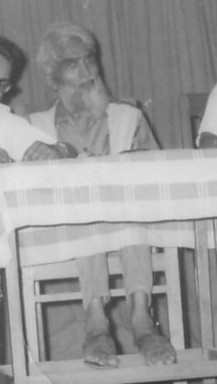
M. F. Hussein, Delhi, 1967
I vaguely knew that he was a well known painter and that he had made a film (Through the eyes of a painter, 1966). I also knew that he had been a painter of signboards and film billboards, before becoming famous as an artist. That was the time when big billboards, handpainted, lined the roads and cinema halls. (On left, Hussein saheb in 1967 during the meeting in Delhi after the death of Dr Ram Manoher Lohia).

My strongest memory of Hussein saheb is from 1966, from an evening in Lalit Kala Academy in Mandi House (Delhi). I think that we had been in Sahahitya Kala Academy, accross the road and then, we had walked with him to Lalit Kala Academy, where there was an exhibition of his paintings. It was during that walk that I had really taken note of his walking barefeet and thinking that it could not have been easy to walk like that on the hot summer roads.

That day, I was acutely aware of wearing my school uniform pants. We were passing though a bad time financially at that time. Our family had recently shifted to a new rented house, leaving the joint family house of my maternal grandfather, and the house rent must have aggravated our family's already stretched finances. I had only two half-pants in those days, and as I had grown taller, they had become woefully smaller and tighter. That was the reason, I had been forced to wear my school uniform pants that evening and I was thinking that everyone must have noticed it and understood that I didn't have another good pair of pants.

In Lalit Kala Academy, I had looked at the paintings of Hussein saheb, that frankly I didn't appreciate so much. I think that most paintings of that exhibition were about jagged black and dark brown lines criss-crossing the canvas, and they had reminded me of barbed wires. Suddenly I was aware of a bit of excitment around us. It was Dr Zakir Hussein, at that time vice-president of India, who had come to see the exhibition. There were just 2-3 persons around him and there were no security issues in those days, so no one had made us go away or stand in a corner.

Dr Zakir Hussein stopped near me and kneeled down to my level with a smile on his face, and asked me if I could make any sense out of those paintings? I don't remember what I had answered him, but I think that I must have been smug and superior, that obviously I could appreciate abstract art.

Decades later, when I had read about Hussein saheb's paintings being sold for hundreds of thousands of rupees, I had remembered some paper in coffee house of Connaught Place, where he had drawn something for me, and regretted that I had thrown away because I had not liked it.

Among his paintings, I remember most the images of horses. I also remember the time after "the emergency" when he had started to draw the Durga images in the praise of Mrs. Indira Gandhi, and the feelings of betrayal it had provoked. Wasn't he supposed to be supporter of Lohia? (Below part of a painting by Hussein in the meeting hall of World Health Organisation building in Delhi)
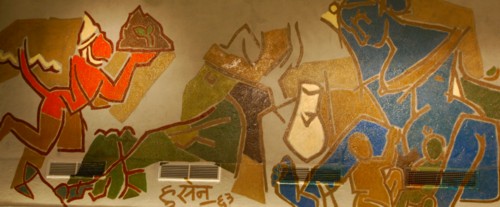
Painting by M. F. Hussein, WHO, Delhi

***
A news item by Dipanker De Sarkar in Hindustan Times about his funeral, defines him as a "devout Muslim". These words disturb me a little bit, though I keep on telling myself that they should not.

Today the words "devout Muslim" bring out the image of a conservative person, someone who follows Holy Kuran to the letter. It seems like a reaction to the Hindutva guys who hounded Hussein saheb in the last decade, saying that he had deliberately wanted to insult the Hindu godess by painting her nude and asking why he never painted the Prophet Mohammed like that.

I didn't agree with the Hindutva Brigade's accusations for many reasons - gods and godesses don't need human beings to safeguard them, they are perfectly capable of taking care of themselves; India and Hinduism has long tradition of people who search for God in their own specific ways - those who stand on one leg, those who go around nude, those who smoke ganja, those who do worship of human skulls in a crematorium, those who look for God through sexual union, and art is also a form of worship; Upanishads also talk of God being there in every thing of this world, there is no place where the God is not there, even in the canvas on which Hussein had painted his vision; and so on.

Seen through the eyes of dominant conservative Muslim discourse as it is understood today, painting Hindu idols, could not have been compatible with being a "devout Muslim". I can't imagine the Hussein I remembered from my childhood, defining himself as "devout Muslim".

On the other hand, each of us should have the freedom to define ourselves as we wish. If in his eyes, he followed the spirit of his Book and for him that was enough to call himself a "devout Muslim", then why should this be a problem for others and for me?

Or perhaps Hussein saheb did change with age? As death came closer, did he feel that he had made mistakes and decided to ask for forgiveness, and become a different person? We can all change with time and as we grow older, many of us, want to go back to security of religious teachings that we had decided to abandon during our growing up years. Was it that?

Or, could it be that the surviving members of his family wanted to give a message to others by saying that Hussein saheb was a "devout Muslim", so these words are about them and not about what Hussein saheb really thought. Mostly deaths and the images that are created for the dead are more about needs of followers and surviving family members and not so much about the wishes and ideas of the person himself or herself.

I think of all these things, feeling a little confused.

Was it like Kamala Das becoming Ayesha and deciding to hide herself behind a Burka or like men and women who decide to close themselves in isolated cloisters or silence of monkhood. They are all bruised and fragile souls, who need some kind of security.

Was it like that for Hussein saheb in his last days?

***
How would I like to remember Hussein saheb? I think that I would like to remember him through different images of Meenaxi, the film he had made in 2004.
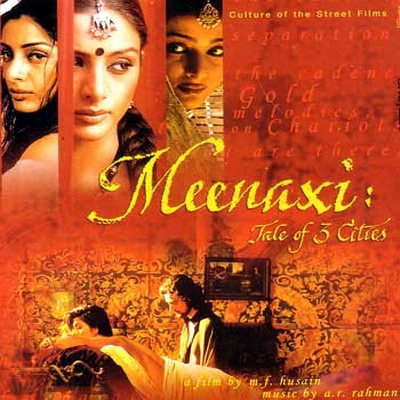
Poster of Meenaxi, film by M.F. Hussein, 2004

Like the scene of the song "Nur tera nur..", where sufi dancers whirl around, while others do Kalarippayattu.

Like the never-ending colours of the holi song.

Like the doors and windows standing isolated in the desert.

Like the colourful round matakas (vases) that roll down sandy slopes, looking for a place to rest.

***
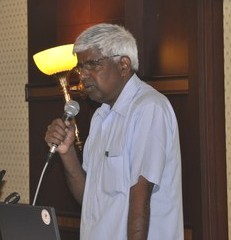
I am

A lazy morning after busy days that started early in the morning and finished late at night. Sitting in the hotel room in Goiania. I need to take shower and start getting ready for lunch at my friend Deo's home. Lucas, her grandson will come to pick me up in about an hour.

I am thinking of the small girl in Vila Esperança yesterday, who had asked Renata, "If he was born in India, why does he live in Italy?", clearly puzzled by the idea of leaving the place she has grown up in and loved so much, to go and live some where else.

Yesterday I also had a long talk with Pio, who had left his Armani suits and well paid job in Milan to come and live in Goias Velho, to start Vila Esperança, together with Max. That was 22 years ago. I am sure that lot of persons ask him, why did you leave Italy to come and live in Brazil? I didn't ask him that, but the idea that he could understand my feelings of mixed identities, made it easier to talk to him.

French-Libanese writer Amin Maalouf had written in "On Identity":

..someone comes and pats me on the shoulder and says "Of course, of course - but what do you really feel, deep down inside?"

For a long time I found this oft-repeated question amusing, but it no longer makes me smile. It seems to reflect a view of humanity which, though it is widespread, is also in my opinion dangerous. It presupposes that "deep down inside" everyone there is just one affiliation that really matters, a kind of "fundamental truth" about each individual, an "essence" determined once and for all at birth, never to change thereafter. As if the rest, all the rest - a person's whole journey through time as a free agent; the beliefs he acquires in the course of that journey; his own individual tastes, sensibilities and affinities; in short his life itself - counted for nothing. And when, as happens so often nowadays, our contemporaries are exhorted to "assert their identity", they are meant to seek within themselves that same alleged fundamental allegiance, which is often religious, national, racial or ethnic, and having located it they are supposed to flaunt it proudly in the face of others.

Anyone who claims a more complex identity is marginalised. But a young man born in France of Algerian parents clearly carries within him two different allegiances or "belongings", and he ought to be allowed to use both. For the sake of argument I refer to two "belongings", but in fact such a youth's personality is made up of many more ingredients. Within him, French, European and other western influences mingle with Arab, Berber, African, Muslim and other sources, whether with regard to language, beliefs, family relationships or to tastes in cooking and the arts. This represents an enriching and fertile experience if the young man in question feels free to live it fully - if he is encouraged to accept it in all its diversity. But it can be traumatic if whenever he claims to be French other people look on him as a traitor or renegade, and if every time he emphasises his ties with Algeria and its history, culture and religion he meets with incomprehension, mistrust or even outright hostility.

Amin Maalouf's words resonate with me. I was born in India and Hindi is my mother tongue. It is the language of all those books in papa's book shelf, that I had started reading as a kid. Nanak Singh, Kishen Chander, Rangey Raghav, Mohan Rakesh, Nirmal Varma .. It is the only language in which I can really appreciate poetry. It is the language of my childhood friends.

English is the language of my logic and reasoning. It is the language of discovering writers from different parts of the world. It is the language of my work. It is also the language that I am most comfortable in writing.

And I dream in Italian, the language in which I talk to my wife and son. Italian is the language I read most now. It is the language that I like using for talking to small babies and dogs and birds and trees.

But Brazilian Portuguese is also my language, as are bits and pieces of French and Chinese. They are all parts of me. Languages, people, friends, journeys, memories, experiences, all are part of me. That is what "I am", if I can borrow the title from Onir's film. My complex identity, that is not always so easy to explain.

Remembering Naidu

Naidu died on 15 March morning.

I had met Naidu only a couple of years ago. While planning for a workshop on mental health in Bangkok, someone had suggested his name. So we exchanged some emails. Then when I met him for the first time in Bangkok, I was immediately captivated by him. He wanted to be called only Naidu.

D.M.Naidu, Bangkok, February 2009
There are people who tread softly in life. Naidu was like that. Treading softly, always gentle, positive and understanding. He had that smile that spoke of a life of suffering, but he never talked of his own problems.

He advocated that persons with mental illness should have the right to decide and take decisions about their lives. Most persons in the workshop were not convinced. How can mentally ill person think and take decisions?

"All right, sometimes there is no choice and you have to safeguard the lives of the persons and of those surrounding them, their families and friends, so you make decisions for them, but it must be for a very limited time. Every one, even those who seem like they are having severe problems, have their moments of lucidity and they can understand and make their decisions. This is a human right of everyone that we decide about our own lives and they must also have it", he had gently explained.

He worked for Basic Needs an organisation based in Bangalore (India), and practiced what he preached.

We had continued to exchange emails once in a while, and I had met him twice more, in India. Last month, in our research project, he had decided to come and share his own experiences with persons who get convulsions. He had talked of his own fight for dignity and independence, after polio and convulsions.

Common friends told me that he had problems with his kidneys but he refused to have a kidney transplant and in the last days, he didn't want ICU, he wanted to be left to die peacefully.

I know Naidu that all those persons for whom you were a friend and patient listener, who matter so little for the society, they are the ones who will miss you most. I am happy that I had the opportunity to know you a little bit. Where ever you are my friend, I know you will continue to tread gently.

***
So much hoo-ha about a drink?

Outlook has a long article on drinking and bars in India, and how the drinks culture has spread and changed in India over the past two liberalized decades. It made me think about differences in Indian and Italian attitudes towards alcoholic drinks.

I have a feeling that the attitudes towards social drinking in India are very much influenced by British-American attitudes towards alcohol. In the article in Outlook, Anvar Alikhan gives a list of characteristics of a good drinking place:
.. what exactly makes a good bar? It’s a complex, personal issue: what a 22-year-old girl would look for would naturally be different from what a 44-year-old male would want. However, certain basic, universal requirements generally apply, such as:

- First, a good drinks menu, with a sufficiently wide selection of good drinks, poured generously.
- There should be a great bartender. He doesn’t have to be a circus juggler, but he must be good at his job, able to mix interesting, innovative cocktails.
- Probably the single most important factor is that the crowd should belong to your “tribe”. Not necessarily people you know, but the kind of people you’d like to know. That’s what gives you a sense of belonging, and makes you want to come back here next time.
- The place must be 60 per cent full. Less than that and it’s uninvitingly empty; more than that and it’s too crowded.
- The service must be efficient, anticipative and unobtrusive. You shouldn’t have to keep waving out for a waiter.
- The music must be interesting, with a mix of familiarity and slight surprise. And the volume must be just right: not so loud that you can’t figure out what your companions are trying to say.
- Great lighting can make a huge difference to any bar.
- Comfortable chairs. Un-ergonomic furniture soon becomes a pain.
- The prices can be premium, but they should never leave you with a feeling of being ripped off.
- A distinctive character, a sense of history, or even a slight eccentricity always adds something special to a bar.
- Ultimately, no bar ever attains perfection. And if it did, it probably wouldn’t be any good anymore. Some small imperfection is always interesting.
My attitudes towards bars and social drinking are obviously influenced by my living in Italy, the original bar country, where there are bars at every corner and where in some areas, small kids, especially in rural areas, get to taste few spoons of wine from a very tender age, and where there are often discussions on nutritional values of wines and local liquers.

In Italy, when people want to go to a bar, they usually go to the one closer to their homes or their work places, or on the way from the home to the work-place, especially where it is easy to find a parking. Here, people go to the bar throughout the day - in the morning for a cup of coffee and a cornetto for breakfast, for another cup of coffee around mid-morning, for a sandwich for lunch or dinner. In all these occasions, some people will also ask for wine or other drink. Some times, usually in winter, some will ask for a drop of Grappa, the Italian grape liquer, in their coffee. So I feel that the relationships with the bars are very different from the ones described above by Alikhan, it is much more familiar.

Thus even attitudes towards drinking are quite matter of fact, and I have never heard of persons talking of good bars and bad bars. May be they talk of clean or dirty bars, or, they talk of friendly and unfriendly barmen/women.

The main differences between Italian attitudes and Indian (and British) attitudes towards drinking seem to be that in Italy, most persons drink wines every day with dinner, and on weekends and holidays, also during lunch. If you are invited by friends to lunch/dinner, you will get offered invariably some light appettizer drinks, then have some good wine with food and then finally have a selection of liquers for after-dinner drinks, that will usually end with a "digestive", that is a bitter tasting liquer with some herbs in it.

In a bar, in the evening, if you are with friends, you can try some exotic looking cocktail, for some social drinking. I think that women go more for this kind of drinking.

Beer drinking is not so common in Italy. Younger people drink it more. Some times, especially on hot days, people will offer you a bottle or can of beer, or you will order beer for drinking with your pizza. But most drinking is done with food or after-food and focuses on wines. I have also not seen persons drinking umpteen bottles of beer to get drunk, like it happens in Africa.

You hardly ever mix water or or soda or even ice in the hard liquers in Italy. I have yet to meet someone here who starts his drinks every evening, before dinner, with two or three pegs of hard liquer, usually whiskey, mixed with water/soda, accompanied by some snacks, that is so ubiquitous in India.

Most important difference in the attitudes towards alcoholic drinks between Italy and India, seems to be the aura of something bad or prohibited that surrounds drinking in India, in spite of the liberalization and changing attitudes in the recent years. The peripheries of cities like Bangalore, are full of seedy looking, dirty and ill-lit drinking joints, where you "hide" to drink. While in Italy, it is more of a common pleasure of life, taken for granted, sips offered to children and to growing up adolescents much like tea in India, and at the same time, that avoids hard drinking.

I have been fortunate with drinks, because invariably the first glass of anything remotely alcoholic is enough to make me sleepy, so usually I tend to avoid drinks. Having half a glass of red wine is usually enough for me! Drnking also makes me more melancholic and introverted. For me, a good bar will be where it is not too crowded, that has no loud music so that people can talk and that does not allow smoking.

Every country has its drink-culture and probably our colonial pasts mixing up with our specific cultural backgrounds, do influence those drinking-cultures. The Mongolian way of seriouly drinking vodka on every occasion or the Caribbean way of having rum or the German love for beer, are very different from the drinking cultures in India and Italy.

However, I think that I need to remember the Indian habits towards drinking when we have guests from India. This means that I must make sure to have whiskey, soda, ice, snacks, etc. and offer it for pre-dinner drinks. I usually forget it and I don't think that our Indian guests appreciate the Italian way of having some light appettizer, wine with food and an offer of post-dinner drinks or digestives!

Usually for an evening with friends, I would prefer to be with at home. We have a good selection of liquers from different countries. This way, no body tries to insist and force me to drink anything and at the end, I usually drink some wine and may be some digestive. And, best of all, after the evening is over I can go straight to sleep!

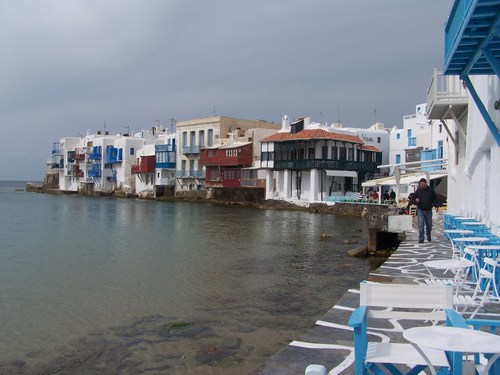
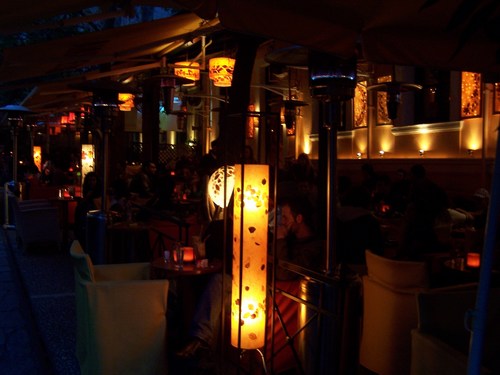
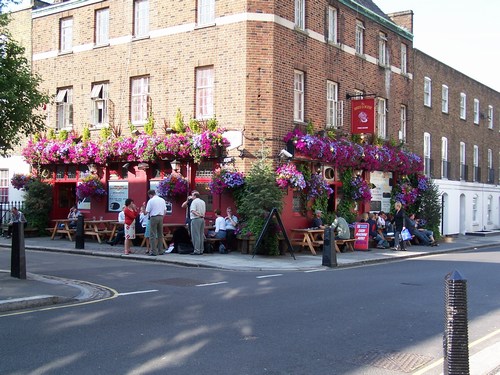
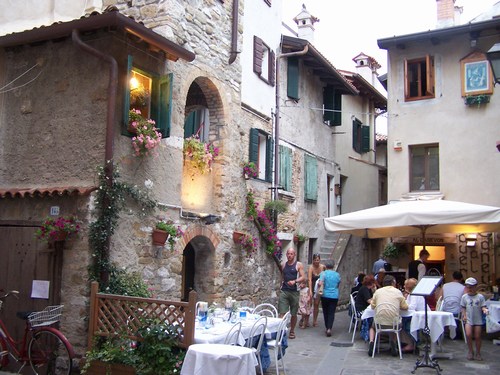
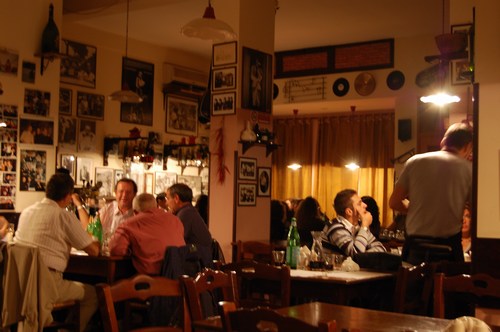
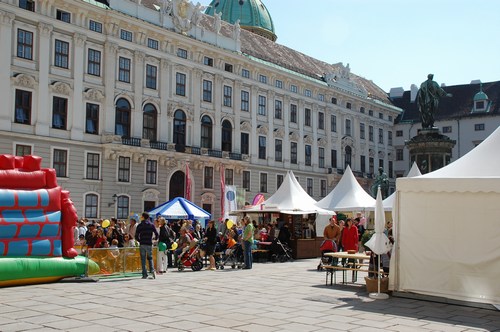
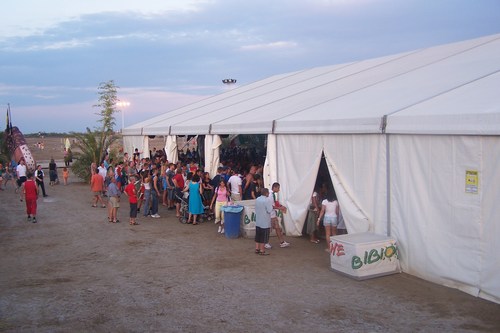
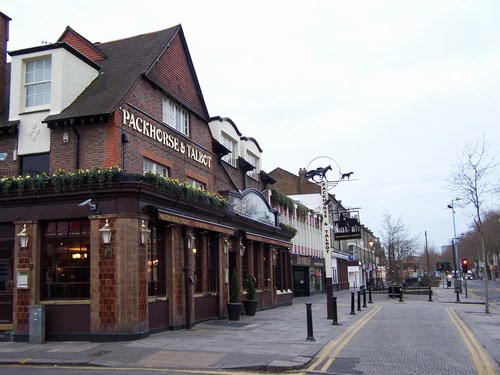
To conclude this discussion on drinks and bars, here are some of my pictures of pubs, bars, bar-restaurants from different countries of Europe:

Having a drink in Europe - pubs and bars

God of Goldilocks

This week's Astrophysics journal has the story of a planet going around a red dwarf star, 20 light-years away from the earth.The planet has been given the name "Gliese 581g", and someone with lot of imagination, has converted the final and unimaginative "g" of the name into "Goldilocks".

It seems that Goldilocks can be a planet suitable for life similar to our earth, "the right size and location for life". May be all those scientists can take a break and need not worry about finding proofs of life on Goldilocks, I can already confirm it. There is life and there is God on Goldilocks, I know it.

Let me try to explain my view.

Scientists have already found that all matter is made of sub-atomic particles, that are in constant motion. Between our world as we see it and the sub-atomic world, there is such an immense distance that human imagination is not enough to understand it. In CERN near Geneva in Switzerland, scientists are trying to break down the sub-atomic particles to find out their compositions. I believe that sub-atmoic particles are made of ultra-sub-atomic particles, and distance of proportions between two groups of particles is as big or may be bigger than the distances between our world and that of sub-atomic particles.

In the same way, I believe that we are the sub-atomic particles of the universe, and may be our universe is sub-atomic particle for other bigger universes. For me, life is the constant motion of the sub-atomic particles, that is such that according to quantum physics it can be in more than one place at the same time. This life force joins all of us, humans, animals, plants, mountains, rivers, oceans, space, planets, galaxies into one. This super-consciousness is God.

It is for this reason that I like the ancient human's ideas of gods like mythical creatures, humans and demons and animals all combined like the mythical creatures on the Buddhist temples in Vietnam, like Ganesh in India, because these give an idea of unity of life beyond the apparent differences in our forms.

Scientists say that all our cells change, some die and others are born every minute, every day. Every time we breath, new atomic particles enter our bodies, mix with particles that make our body and some go out with our breath. We are being renewed all the time. Think of a being on Goldilocks, millions of years ago - its atomic particles mixed and travelled in space and have arrived on earth and have entered your breath. Goldilocks is here, inside you, inside us.

Only sex wins

Years ago, when I started this blog, I had told myself that it does not matter, who reads my blog or if someone reads or not. I had told myself, I write for myself.

Then I found a widget for a "Hits counter" and I added it to my blog. Every time, I opened my blog, often I found myself checking how many persons had visted it and seeing the number of visits gave me a kick. I thought, yes, people do come here to read what I write, so I must be good.

Then a few months ago, I discovered Google analytics, a way to check, how many persons from which parts of the world came to my blog and what were they reading. And discovering this has delfated my ego a bit.

I found that new posts get 10-15 visits for a day, but there are a few posts on my blog that get get daily visits of 10-15 persons, people coming mostly through the search engines, and all these persons are looking for things connected with sex and sexuality. Many persons come looking for images in these posts about sex and models. The most popular posts are:

New Italian sex symbol is a cow?
Sonagachi prostitute and the yellow turbaned sarpanch
Sexuality in Pelagio Pelagi collection
Defining human sexualities
Sex and hypocrisy
Sex and the gods
Hiding the body
Italian sex symbols

I am no prude, and I think that sex is wonderful and an important part of our lives. Yet, to find that out of about 200 posts that I have written, all that can get readers are these few posts about sexuality (actually most of them are about art, sexual identities, sexual repression, and not explicitly about sex) does not feel very nice.

Anyway, I think that knowing what sells, what brings people, corrupts. I find myself thinking that perhaps I should write more such posts, so that more people come to read my blog, even while knowing that this is hogwash, people looking for sex are not likely to glance at any of the more serious stuff.

A sobering thought! What do you say?

The old pictures

It was an old black and white photograph. There was nothing particular about it. Yet, it caught my attention. And I must have glanced at it only for a moment. With my sister, we were going through old papers of my mother, trying to think of things to keep and those that could be given away or may be thrown away.

Margaret Loiuse Skinner, Fullbright professor, 1921-1992

There were too many things to be looked at, so we were just trying to look for really important things, and to keep them separately. At the rest, we could take a look later.

"Margo", I told my sister, showing her the picture. The name of the person in the picture had come to me in a flash. There were two of her pictures there and a postcard. I had put them in the bag of things that I wanted to look first.

My mother's diary was the most important thing among those papers, and it was the first thing I did - transcribed it on computer. Day after tomorrow, it will be three months since she died. Going through her papers, her diaries, her pictures, is perhaps my way of trying to hold on to her memories.

So yesterday, while going through some of my mother's papers, I again saw that black and white picture of Margo. It has her signature on it, with her full name, Margaret Louise Skinner. But she liked being called Margo, I remembered it.

I had met her in Hyderabad in June 1960, when I and my other sister, had gone there to spend the summer holidays with our father, who was working in that city at the office of Socialist party. I have a vague memory of going some where with Margo and my mother on a rickshaw. At that time, I had no idea of who she was and what she was doing in Hyderabad. She was obviously angrez, a foreigner and a friend of my father. I also thought that she was somehow related to Socialist party, perhaps someone admiring Dr Lohia, the socialist leader - I don't think that anyone had said it to me, I must have assumed it.

Some months or may be a year later, when we were back in Delhi, I remember her parcel from the USA. There were two animal figures like soft and furry gloves in the parcel, where you can put your hand inside the glove, put fingers in the eyes or mouth of those animals and move your fingers to make them move like puppets. It also had some make-up things like lipsticks and eyeliners for my mother. I remember looking at those gloves once, but I never found them them again and slowly I forgot about them. May be my mother had put them away as they must have been very precious because you couldn't have found something similar in India in those days. Or perhaps, she gave them to some body?

Those childhood memories, sharp and vivid once, slowly faded as I don't remember hearing her name again. Some of those things came back, as I looked at her pictures.

The postcard is from Florence, it has a postal stamp of 19 January 1961. The card is addressed to my father and she has signed it as "M". In the card, in small and neat handwriting she talks about her stay in Florence and the things she has seen in the city ("staying in a pension, for 5 dollars a day, including three wonderful meals and wine"). She also wrote that was getting ready to leave for Paris and then to take the boat back to New York.

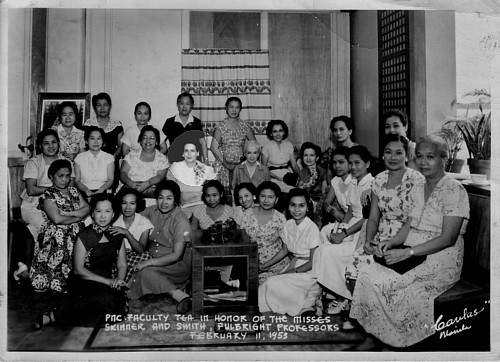
The second picture gives a little more information. It is the "afternoon tea" offered in the faculty to "the Fullbright professors Miss Skinner and Miss Smith" in 1953. From the faces of the persons in this picture, I think that it must have been taken somewhere in Philippines. So this means, Margo was a university professor and had been a Fullbright professor outside USA! May be she had also come to India as a Fullbright professor in 1960?

Margaret Loiuse Skinner, Fullbright professor, 1921-1992

I did an internet search and discovered somethings more.

One Margaret Louise Skinner was born in San Francisco on 10 April 1921, and she had died in 1992. In 1990, together with a person called Fritz Leiber, she had published a book of poems under the name of "Margo Skinner" titled, "As green as emeraude" (Dawn Heron Press, USA).

There was another Margaret Louise Skinner, born in 1921 in Kentucky, who had also died in 1992. She was married but didn't have children.

I couldn't find any of their images on internet, so I was not sure if poet Margaret was the Margo I had met in Hyderabad or was it the Kentucky one?

I tried to look for more information on the poetry book and found my answer. Among the titles of her poems there are - At an Indian wedding, At Mahabalypuram, Vishnu and ... To Deepak.

Reclaiming my faith

It was January and sister Leela, an old friend and a nun from India, was with us that evening. Marco and Atam, my son and daughter in law, had come for dinner. Leela recited her prayers asking God to bless all the persons sitting around that table and made a sign of cross. All others murmured "Amen" and made signs of cross, including my Sikh daughter in law. I didn't.

A few days later, we were having dinner in the evening, when I told my wife what was troubling me. I had grown up in India, where I had learned that we respect all religions. As a child and a growing up man, in India, if I visited a Gurudwara of Sikhs, I would cover my head and kneel before Guru Granth Saheb, if I visited a church, I made a sign of cross, if I visited a temple I would fold my hands and accept the vermillion mark on my forehead.

We were not a religious family. Rather, I would say that I heard much more criticisms about Hinduism. My mother often complained about "hypocrisy in the temples and wasting precious milk and ghee on stupid rituals that can feed so many poor". My paternal grandmother, wrote "Ram, Ram" countless times on sheets of paper to espiate her sin of being a widow and read religious books. We would go to all Ramleelas and Durga Pujas with very non religious excitement of "having a good time" and hoping to get some tasty prasad to eat.

In Rajendra Nagar, where we lived, on one side we had Sajid bhai and his wife Ireen with their two children, and above them the very religious Sharma family. There were many Sikh families in our street. But my closest friend was Sam, who had come from Hyderabad to stay with his aunt, Mrs. Rock. With him, I had gone to a few mid-night Christmas masses.

Yet, religions of the persons were not something so clear in my mind. Like Akhtar bhai, who must have been just 5-6 years older to me and who used to come to our home to meet my father, I had never thought of him as "Muslim". When I had to go to Udaipur for an interview, I stayed with Haseena ji's family, a friend of my father, without really thinking that I was going to a "Muslim" house.

Perhaps those times were different and today religious identities and differences have become much more marked, but I often find myself thinking of the past and classifying persons by their religions, like I did above for Sajid bhai, Akhtar bhai and Sam. It feels wrong to me yet I can't stop myself from doing it. And it all started about two decades ago, when I decided that I will not make the sign of a cross.

Coming to Italy was what started this change. People here are more used to sharp religious boundaries and perhaps most of them expect persons to follow those boundaries clearly. "If you are not Catholic and you are not even a Christian, why do you make the sign of cross?" an Italian priest once asked me. I tried to explain that it was normal in India, that going to a church or making the sign of cross did not make me less Hindu, but it showed that I respected the others, but he was clearly not convinced.

That priest was not the only one. It happened a few more times. They said that it was "hypocrisy" or "ambiguous" or "dishonest" or "an attempt to conform and to ingratiate". I was angry and hurt and I stopped making the sign of cross in a church. Thus, whenever I accompanied my wife to a mass, I would stand stiffly, showing clearly that I was not Catholic.

It hurt me inside and every time I entered a church as a tourist, I felt that I was disrespecting God by not stopping to pray for a few moments. I knew that it was not rational. How does it matter to God if I pray inside me or I show it with folded hands or with a sign of cross? A temple or a mosque or a church is just a building and God is no more or no less there than in any other building? I tried to explain it to myself, to justify it, but I felt as I had violated something at deeper level inside me.

It was the first time, I was actually talking about it. I told my wife all this. She felt that I should not let myself be influenced by what others say or think about my religious ideas, but I should behave in the way I wish.

In April, when I visited India, I talked about it with Daisy and like my wife, she had the same advice for me, to behave in the way I felt inside me and not let myself be influenced by others.

Understanding something rationally is perhaps different from the emotional understanding, when something comes from deep inside you? I had the rational understanding but I was waiting for my inner self to understand it.

Finally it came on last Sunday. I was in Rome, visiting an old church. There was just an old woman sitting and praying. I made my peace with myself as my hands made the gesture of cross.

Actually I have not changed my way of thinking. The statues or the temple or the church or the mosque, do not make any difference to me, since I feel God is there in everything, in all beings live or inanimate. But I feel happier, I have reclaimed my right to respect the religions in way I feel right. If others feel that I am being a hypocrite or ambiguous, they are welcome to think what ever they wish.

Reincarnation of Arre kya ...

This blog is closed. It is getting reincarnated on Wordpress. Have a look at the new Arre Kya Baat Hai.

Sorry, that was a false allarm. Wordpress may be cooler, but probably I am old and used to my old ways. So after a short stint in Wordpress, I am back here!

Climate change and dwindling arm-pit forests

There was an article on the international year of astronomy. It had beautifully illustrated pictures of different shapes of galaxies that have been photographed with potent telescopes. The pictures show specks of lights joining together to make shapes like rings, caps, spirals, etc.

It is difficult for us to imagine the distances to stars in our own Milky Way galaxy. The idea of travelling with the speed of light for a thousand years to reach a star in our own galaxy is difficult enough to grasp. Try to think of millions of other such galaxies, each expanding out forever or getting sucked back in to black holes and the distances that separate them from us, then you can understand the limits of our own imagination and understanding.

Can there be beings that are thousand light years larger to us humans in size, who inhabit this universe and walk around, taking giant strides, and for them the galaxies are like flats in an apartment building, that they pass while going to the office? At the end, it is just a question of proportions!

Because our earth is so tiny in comparison, smaller than a small pinhead compared to this universe of galaxies, and on that tiny little pinhead of earth, to those giant beings we humans would be like sub-atomic particles. Who knows if they can see us in their microscopes? or may be they have not discovered us yet?

That started me thinking about the bacteria and viruses, those tiny sub-microscopic living things that we can’t see but we can sneeze them out to pass on swine and avian flu to our fellow humans or eat in millions mixed in our yogurt. Like for us the distances to all those galaxies are unimaginable, perhaps to the bacteria that live on our bodies, we human beings are like planets or galaxies?

Like a bacteria living on our foot thinks that the little toe where s/he lives is his/her country, our body the earth, the other persons in our house the solar system and doesn’t know if there is life at those far away stars that are the apartments we can see from our window. Who knows if they have passport checks for going to other toes? And the catastrophs like we taking shower or an oil massage or getting licked by dogs or our lovemaking, that occasionally destroys all the living bacterial dinosaurs and makes for "breaking news" of the bacterial news channels. "Another cyclone is going to hit toeland, residents are request to evacuate!"

For them the distance between my house and my office must be like thousands of light years away.

Actually our bodies are like complex ecological systems as mentioned in an article on The Week recently.
"What I found most surprising was the great diversity of bacteria living on the skin," said Julia Segre of the US National Human Genome Research Institute in Bethesda, Maryland, who led the research. According to the first big census of microbes, parts of the body such as the moist armpits were akin to tropical rainforests in terms of the type of ecosystem the bacteria inhabit, whilst other areas of skin were like dry deserts.

"The second most surprising finding was that the skin was like a desert with moist areas like streams such as the armpits, and isolated oases of life where there are rich reservoirs of deep diversity, such as the navel," said genetics specialist Segre, whose study is published in the journal Science.

The human bodies are ecosystems, believed home to trillions of bacteria, fungi and other microbes that naturally coexist in the skin, the digestive tract and other spots.

And for millions of those living beings, climate change means your new deodorant or the antibiotic pill you pop in. Try imagining yourself submerged and surrounded by a living complex ecological system and you will understand that all those antiseptics and disinfectant sprays, cloth washers, dishwashers that marketing guys want you to buy from all the TV screens and ads, are actually all ecological disasters, killing millions of yet undiscovered bacterial and virus species and probably promoting scourges like antibiotic resistance, killer viruses, new kinds of allergies, etc.

Perhaps we human beings are also one of those killer viruses that sprang out and colonized the whole earth because one unthinking giant being killed all the dinosaurs because a dust particle hit him?

So please, don’t shave your armpits. And don’t put deodorants or other lotions. I don’t mind the smell. I prefer a living world on my body-planet. Down with artifical "civilization" and back to nature.

The countries I have visited!

I found this website where you can make maps of countries you have visited and I found that I have been to 63 countries! Actually there are a few where I was only at the airport in transit but technically I have been on their soil (I didn't count places where I was in the plane and didn't actually get down).

New Beginnings

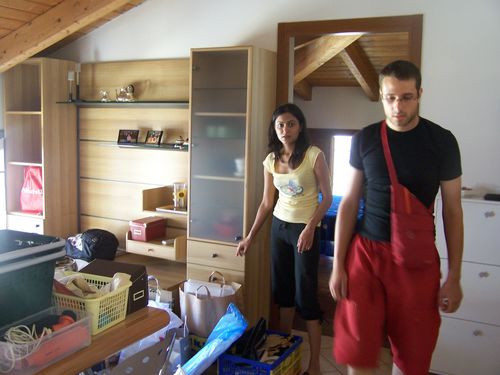
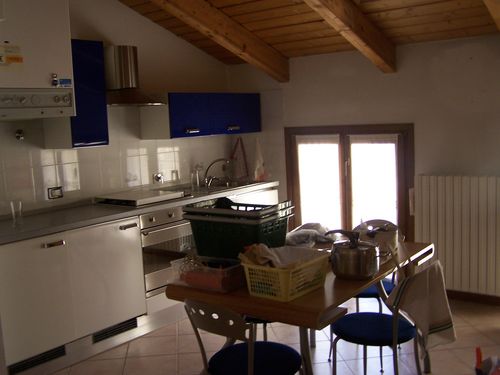
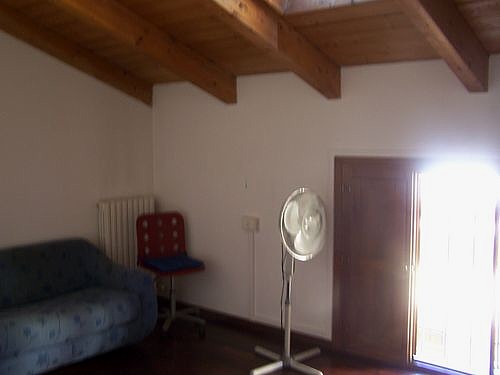
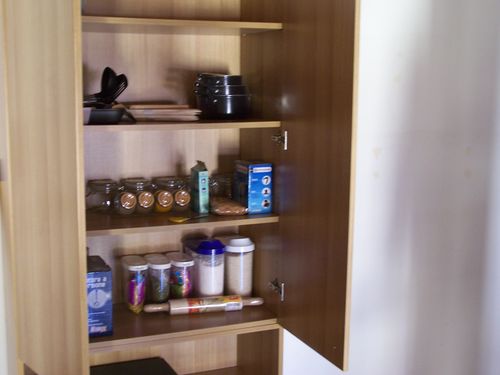
Yesterday 9th August 2008 Marco and Atam moved to their own apartment. It is in a small city called San Giovanni in Persicetto, about 20 minutes drive from our house in Bologna. It is a small and nice loft on second floor, with sloping wooden roofs and wooden floor. It has an entrance cum dining room and kitchen, a bedroom and big study-TV room that can also serve as guest room, a big bathroom-toilet.

When children grow up, I guess all parents want to see their children happy and settled in their lives. This is something they have to do and as parents you can stand close, give all encouragement and keep your fingers crossed that it works out. It must be like when mother bird watches baby bird take the first flights.

So an important phase of our life has ended. After marriage, raising up Marco was something that influenced all our lives and took absolute priority over every thing else. Now he is married, both are working, seem happy and in love and finally they are living on their own. Suddenly, we are back to our early marriage days before he was born, without needing to think about raising up family and making plans for future.

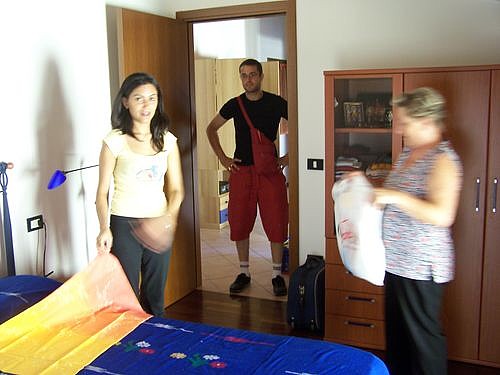
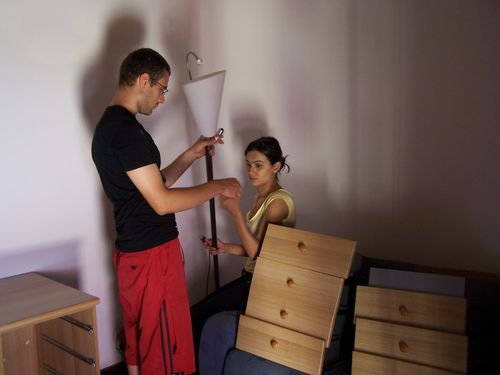
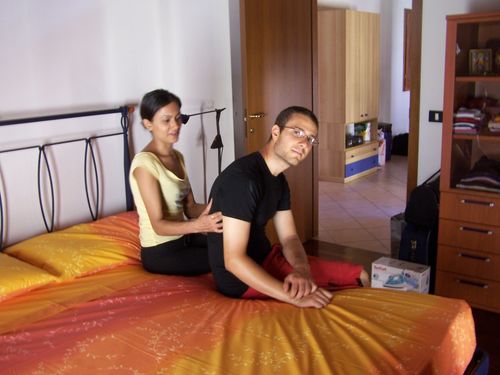
For last 7-8 days, they had been taking few things at a time to the new house. Nadia and Atam had been working a lot on cleaning, shopping, etc. Then yesterday they thought that the house was ready for them and so they were off to sleep in their new house. Here are a few pictures from this first day in the new house.


Entrance-dining room-kitchen (above & below)


Bedroom (below)


Study-TV room_guest room (above & below)


Important working place (below)


Cupboard with all mirch masalas (below) and rolling pin.


Best of luck to Marco Tushar & Atam Prabha in their new house


One summer afternoon

I had woken up at nine. I am on holidays so there is nothing strange about waking up at nine. And it was a Saturday morning. But I have always insisted that I am incapable of sleeping till late and that I must go to bed at ten and wake up at five in the morning. This is my natural rhythm of life, I say.

Perhaps, over the past few years, my sleeping and waking hours depend upon my computer and internet? Early morning is the time for reading emails, writing blogs, reading on internet. And, here in Bibione I have no internet, so I don’t have any incentive to wake up earlier.

After a lazy coffee and cereals, I put on my swimming costume and a t-shirt, Nadia was wearing her two piece swim suit and off we went to the coast. It takes about ten minutes to reach the seaside and every day we follow the same routine - a walk towards the light house of Bibione and back to the beach for a swim, before coming back home for lunch and afternoon siesta.


Yesterday was no different. It is liberating to wear swim suits and walk in the city centre where other persons are more or less in the same state of undress. The sky was bright blue and there was not even a tiniest bit of cloud floating up there. But it was not hot, there was a nice cool breeze.

It was almost 10.30 when we had started from home and by the time we reached the light house it was almost mid day. I asked Nadia to climb on some rocks in the beginning of the sea, so that I could take her pictures. While I was clicking her pictures, I remember thinking that those pictures were like love letters. Probably all marriages go through this process that starts from love, goes trough a process of friction, discussions, fights and mutual adjustments and then finally finds its groove, where you understand each other and in spite of all the differences, love each other’s company.

In front of the light house, we asked someone to take our picture. Every year, in front of the light house, we ask someone to take our picture. Looking at these pictures from the past 26 years, I can see how age has been changing us.


1988
1991
2005
2008

As we walked back, I remember that we looked at a family with a dog that was walking towards us and we talked about the absolutely cuddly dog. And it was almost as an afterthought, when I realised that the lady in the group was topless. How quickly you get used to the human bodies, and why do fundamentalists of different religions make such a hoo ha about female bodies, I had thought.

Back at the beach, it was time to go for the swim. The water was slightly cold and absolutely transparent. Putting the head under the water, I felt that I was floating in the beautiful green coloured world. I could see Nadia swimming close by but there were not many other persons swimming at that time. Probably people were going back for lunch since it must have been around 1 PM. Then I started to do rotations, I love rotating in the water, going round and round like a seal. The only problem is that nowadays my head starts to spin so after some rotations I must lie still waiting for them to pass.

I was floating in the water, when I heard Nadia call me. “Don’t go near the boulders, they are sharp and cut you”, she called. During my rotations and floating, I had drifted close to the boulders placed inside the sea like a finger going inside the water from the beach. I dived in and swam away from the boulders. As I came up for air, I saw that I had not moved away but rather I was a little closer to the boulders. I tried to feel the ground with my feet but it was too deep and I couldn’t touch the ground. I could feel the strong current pushing me towards the boulders, so I tried again, making big powerful strokes to move away. Again, as I raised up my head from water, I saw that I had made little headway. Suddenly I panicked. I could feel the sea as something living, surrounding me from all sides and pulling me inside.

Nadia was swimming towards me and I told her to stay away and not to come closer in that strong current. “Go towards the boulders, let the current take you, go the other side of the boulders”, she cried, sensing my panic. I followed her advice, going towards the boulders and slowly got up on a boulder just underneath the water surface. The surface of the boulder was full of sharp cutting edges but I did manage to get up and sit down. Nadia on the other hand, had gone beyond the tip of the boulders and passed to the other side. “This means it can be done and the current is not that bad”, I thought and slowly the panic passed.

After five minutes, when I had got back my breath, I moved gingerly over the boulders underneath the water surface and then dived in, swimming away from them without any problems.

Perhaps I had not been in mortal danger and it was all panic and if I had shouted, life guard would have heard me or other persons swimming not so far would have heard me and would have saved me. But for me, that sensation of being pulled inside the sea, feeling the sea as a living being surrounding me and laughing at me and tempting me to go and loose myself in its wonderful green world, were very real and if Nadia had not been there, perhaps that panic could have ended differently.

Family & Friends

Visit to India means meeting the family and friends, some times after a long long time. This time I was back in Hyderabad so that meant meeting Madhu didi, Satish & family.

Then I was surprised to learn that Seema (mausi) was in Hyderabad to be her son Gagan and his wife Sunita and their kids. They came one evening to pick me up.

Finally, in Hyderbad, I met my friend Laltu. It was an opportunity to record some of his recent poems in his voice.

Then I went to Orissa. I travelled a lot, but I forgot that Belpahad was in Orissa too and that I could have tried to see Vidhu dada and Preeta bhabhi. By the time I realised it it was too late and I had to leave for Delhi.

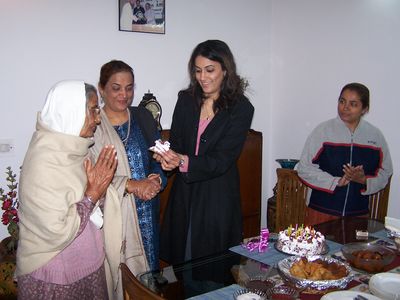
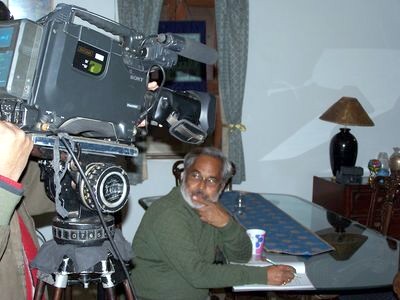
The final three days in Delhi were gone in a second. I had so many things to do and I hardly saw or met anyone. On one of the days, Arun was shooting a documentary at home so there was added confusion. When I left Delhi, I was promising myself that next time I will be back for holidays and not for work, and then I can spend a little more time with family and friends.

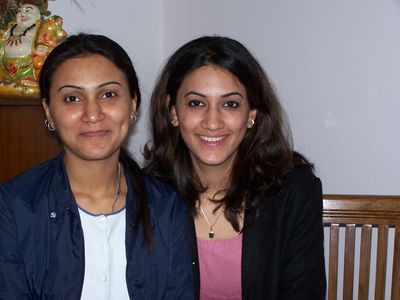
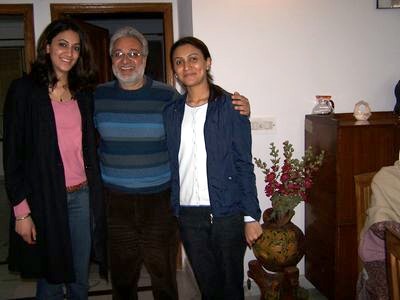
Anyway, here are a few pictures from the family and friends visits in India.


Police, writers & peace keepers

I don't usually associate the words like writers or poets with police. Not that I ever knew any one from the police but it was about their image. It is true that I had read of well known police woman like Kiran Bedi and she is not the usual image of police, but in my mind, without ever consciously thinking about it, she was some thing exceptional.

Priyanker had written to me about his friend Mahendra, that Mahendra from the police services was coming to Vicenza in Italy for some training and that Mahendra was also a poet. That intrigued me, a policeman and a poet? Poetry means sensitivity and understanding of human pain and suffering. Police duty means bringing criminals and law breakers to justice, where there is not much space for senstivity or understanding. That is what I thought and the apparent contradiction, intrigued me.

It would have been lovely to meet Mahendra but the only problem was to find an opportunity. "We are busy throughout the week, and next two weekends we also we are busy", Mahendra had said. I only these two weekends free and then I am supposed to go to London for work. Probably it will be difficult to meet him, I had thought in my heart.

And then he sent a message yesterday that today, Sunday 25 November evening, their group was passing through Bologna and stopping at one of the local police offices for dinner, on its way back to Vicenza. And so I asked my son to accompany me to meet Mahendra.

There are thirteen persons from different police related services from India, who have come here for "training of trainers" course for UN peace keeping. Apart from Mahendra Singh Poonia, suprintendent of Police at the Government Railway police in Siliguri, I also had a brief opportunity to meet Satya Narayan Sabat, DIG Police UP. Like Mahendra, even Satya Narayan is into creative writing. His book 'Bharatiya Sanskriti Mein Manavadhikar ki Avadharana' (Ideas of human rights in the Indian culture), which deals with human rights in the light of Indian culture and stresses how it directly and indirectly is influenced by the same, received a national human rights commission award in 2004-05.

It is not often that I get an opportunity to meet creative persons involved in Hindi writing and it would have been wonderful to know them better but the time was short and soon we were surrounded by other persons from the Indian group, including three women. I heard the introductions, Simla, Himachal Pradesh.. Chennai, Tamilnadu... Rewa, Madhya Pradesh, ...CBI, CRPF, ... but the there was no time to learn their names or to know them as persons.

Soon their instructors were telling them to get ready for the journey back to Vicenza and we said hasty goodbyes. As I came back home, I was thinking, how often we tend to categorize persons by mental stereotypes and yet when you know the real persons, they are very different from those steroetypes. My perception of persons in the security forces has changed from this brief encounter.

Here are two pictures from the evening. In the first one, from left to right, it is Satya Naayan, I, Mahendra and my son Marco Tushar; the second picture is of some members of the Indian group.


The Ode

When your children grow up, their success makes your heart grow with pride. That is how I felt when I watched the trailer of "The Ode" and then paused near the end to read the credits, searching for a name and then finally finding it!

You can watch the traler on You Tube by clicking here.

Invisible threads

My wife says that potato chips are bound to each other by an invisible thread. If you pick up one, the next one comes up automatically. Perhaps, thoughts are the same. Only that, one thought leads to another completely different. Thus, thinking in terms of potato chips, potato chip leads to a jalebi, that goes to a samosa and so on!

As I pedal my bicycle in the morning to the work, most of the time riding the bicycle and negotiating the traffic happens in automatic mode and my mind meanders in different directions. I am convinced that some of those ideas are terrific but the problem is that by the time I reach office and want to write them down, I can't remember most of them!

That is how it was this morning. I was pedalling furiously. Behind our house, they are cutting deep gashes in the green fields. A new road is going to come up there. Further ahead, a new access to the highway is flattening the existing hills and building new hills. Even further, the railway tracks are being moved so that the high speed train lines can be put in their place. Our part of the city is changing face!

The side effect is that the road is full of dust and with the strong humidity in the night, every morning my bicycle wheels raise up drops of dusty glue that sticks to my pants.

And I was thinking about the Anarchytect post I had read in the morning about buildings, spaces, layouts. For a lot of things, I realise that I am very superficial. Buildings are part of those things. I mean, a building is a building, full stop. Thinking of spaces as something alive, that you mould and shape like dough for making chapattis, seems kind of strange. Seeing the landscape around our house changing in front of us, I know it is true but I still keep on believing that the landscape is something physical, fixed, unchangeable, so why think about it!

Another of these things is art. I mean, you watch a nice painting and instinctively you know whether you like it or not. What need is there to dissect it, analyse it?

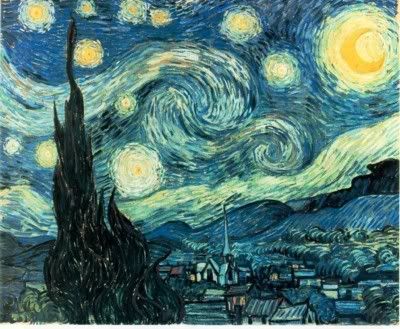
You are wrong of course, you just need to read the Hindi article of Om Thanvi on Starry Nights of Van Gogh in MOMA in New York to understand how wrong you are. There are eleven stars he writes. The bottom most star, its luminous white contrasting with the wonderful yellow of the moon is probably the morning star that Van Gogh saw from the window of his sanatorium and wrote about it to Theo, his brother. The spire of the church in the background is more like the Dutch churches of Van Gogh's childhood and not the French churches surrounding his sanatorium. The cypress tree in the left rising up like a peacock feather, is it a death wish? Van Gogh did die a few months after making this painting.


Once you read that article of Om Thanvi, it changes the way you look at this painting. It is no longer a question of if you like it or not, you can understand it and see things that you did not see earlier.

Suddenly my thoughts about starry nights and Van Gogh were interrupted by a new song in my earphones. I religiously put on my ipod when I start from my home but I hardly ever remember the songs I have heard during the journeys. But this song was great and different. Ajnabi Shehar it is called and it is from Jaaneman, I found out later. The singer, perhaps Sonu Nigam, sounded just like Rafi did in those wonderful songs from a film called Jhuk Gaya Aasman! It had came out in 1968 and had music by Shanker Jaikishen and had Rajendra Kumar and Saira Banu in it. Not that I liked Rajendra Kumar or Saira banu. There is no rational explanation for this jump from Ajnabi Shaher to Jhuk Gaya Aasman, but that's how thought are. Unpredictable and irrational.

What was the story of JGA like? It had something to do with death. I thought furiously, weaving the bicycle between cars stuck in a traffic jam. Rajendra Kumar dies in it, but then comes back. Actually there were two Rajendra Kumars. One poor and nice, in love with Saira Banu. The other rich and bad. The bad one was supposed to die but by mistake, Yama kills the young and poor. By the time they realise the mistake, his body has been cremated or whatever, so the good one goes in the body of the bad one. I had seen it on a black and white TV in the prehistoric days of Indian TV.

JGA had same story as of the Warren Beatty film, Paradise lost or can wait or something like that! This last bit of knowledge is fairly recent that Bollywood had started copying long time ago. But JGA had lovely songs and this song from Jaaneman reminded me of it - except that it is better, having strange interludes between the stanzas, changing the music styles completely each time.

While trying to think of the Jhuk Gaya Aasman songs, I braked in front of a truck of leaves-collectors in the park, that was blocking the path. By now all the trees in the park are naked with skinny arms and the beautiful golden, yellow, kathai, burnt siena of autumn leaves has been replaced by a rotting mass on the ground that sticks to your shoes and to bicycle wheels, making a squashing sucking sound as you walk on it. The leaves-collectors looked like ghost-busters from the film of the same name, with a motor in their backpack and holding thick tubes blowing hissing air like giant earthworms, pushing the sticky gooey mass towards the suction pump of the truck. Leaves-ghost-busters they are, picking up dead leaves, I thought.

Can trees have ghosts too? I had arrived in the office and so the question remained unanswered and like the last dream of the morning, it also slowly dissipated into nothingness.

First Anniversary: Marco & Atam

Last year, in these days we were in Delhi for the marriage of Marco & Atam. For their first anniversay, they decided to spend the new year in Florence. On 2nd January 2007, we went to the Singh Sabha Gurudwara in Novellara (RE) about 80 km from Bologna. The evening concluded with a dinner at a chinese restaurant in Bologna. Here are some pictures from these days.


Against nature?

There was yet another debate on the TV about nature versus nurture, this time provoked by the news that the museum of natural history in Oslo is organising an exhibition on homosexuality in animals.

It is never easy to say what do we inherit from our parents through the genes and what is more learned behaviour depending upon where we grow up. Somethings that may seem clearly hereditary are not always so.

Like people often said that my voice sounded exactly like my father's. And now on telephone, my son's friends mistake me for him and my friends and colleagues mistake him for me. Is that because of genes or is it because growing up together, I subconsciously internalised my father's voice and my son did that with my voice?

Illnesses like high blood pressure running in families, have similar confusions. Do you get high blood pressure because your ma or grandma had it or because living in the same house, you share all your habbits of eating, exercising, reacting to stress?

It is much easier to deal with physical characteristics like the colour of your eyes, or the shape of your ears. That you did get through the genes.

There are many practical implications of the final conclusions of such debates, and that is why any conclusion is hotly debated. For example, if we accept that mental illnesses like neurosis are the result of genes, then perhaps all theories of Freud and therapies like psychotherapy trying to find the cause of your illness in the way your mom wrapped your nappies when you were three months old, can be considered as useless!

Another practical example is about criminal behaviour. If we accept that criminal behaviour is because of genes, then what use is putting the fellow in the jail or worse, hanging him? What could he do, he had no choice but to follow his genes?

So to go back to the debate on the TV on homosexuality in animals, the stakes are much higher. Different religions consider homosexuality to be against nature. Here, vatican officially assumes a similar position. If we accept that animals can also be homosexual, such arguments will be difficult to sustain.

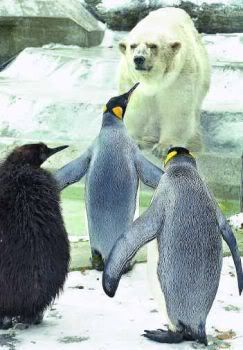
Actually such debate is not new. Some years ago there was lot of discussion about some male Humbolt penguins in a German zoo who preferred to stick with their own company while the females were left in peace.

In the debate on the TV, we had similar arguments. It is the stress of living in the zoo, it is the stress of increasing urbanisation, these are not real serious relationships but only playful behaviour in animals, and so on. So it will always go on, each side refusing to be convinced by the other.

In the picture, the famous humbolt penguins from the German zoo.


Ragging lessons

There are broadly two kinds of persons in the world, I thought to myself. Those who live surrounded by transparent shells and life’s woes seem to touch them lightly, leaving them to live in their blissful ignorance, and those filled with angst, their sensibilities weighed down by the injustice of it all, every experience leaving a burning hole in their souls. Probably Sujit Saraf belongs to that second group, I thought to myself, as I read his article on Tehleka about effects of ragging he received at IIT Delhi twenty years ago.

Actually his description of ragging is quite funny:

We did many things in that one month that now appear harmless and amusing. We stood on benches in the dining hall and recited the national anthem; we crawled on all fours and barked like dogs; we brought cigarettes and Campa Cola for our seniors; we cleaned their rooms; we dropped our trousers so they could measure our penises; we formed human trains — each car holding the penis of the car in front — and whistled our way through hostel corridors; we simulated orgies; stripped naked; then wore underpants over our trousers to turn ourselves into comic book phantoms.
The impact of these experiences are summed up by Sujit as, “After so many years, I can list all these forms of ‘ragging’ dispassionately, but no one should be misled. Brutality and oppression remain just that, no matter the name used for them… Ragging is a case study for Freud, nothing more.”

If Sujit belongs to the second group, I probably belong to the first. While he seems to have been traumatised by that experience, his words brought back many happy memories for me.

The first time I encountered ragging was when I went to submit some form at MAMC near Delhi Gate. A pimply seventeen, I was suddenly pulled into a small door at the side of their auditorium. Soon my pants were around my ankles and I was asked to wank. It was slightly embarrassing to admit but I didn’t know what wanking meant!

I knew the words all right, they were used often by boys, but I had no idea that you actually did something. Probably I was too busy day-dreaming or reading or playing, and though it had been many years that I had “wet dreams”, I hadn’t ever thought much more about it. I did have some vague basic ideas of what fucking entailed and that was my sex knowledge. I don't think that I thought kissing caused a women to become pregnant, but probably I was not so sure about it.

My raggers screwed up their noses but were not too surprised, apparently they had seen other ignorant boys like me before? Any way, I was shown the simple practicality of wanking and let off. I won’t bore you with the details of my experiments with that knowledge later that day, but just for that lesson alone, the word “ragging” brings a smile to my face.

The other lesson came in Meerut a few months later, in the hostel. Fifty or sixty boys, running around naked and doing hundred little things like the ones described by Sujit above, was an opportunity for close observation of the variations in that small appendage that is apparently supposed to the centre of men’s lives – the penis. It was the best cure possible for all those anxieties about is it too small, is it too long, is too thin or thick or whatever, that seems to afflict many of us. It did cure me of those anxieties any way. After the first two times of being naked with other boys, any sense of humiliation or shyness disappeared.

It was fun and a way to look at things that earlier, I didn't have the courage to ask or think about.

The third lesson was about female sexuality. Fed mainly on Hindi literature, where sex is hardly ever mentioned directly, I had an idea that sex was something pleasurable for men that was “tolerated or suffered” by women. Both, male and female students of the medical college had their “anthems” full of obscenities, and it was the women’s anthem that opened the magic door for me – sex could be something desired even by women!

Probably I can come up with some more lessons that I received from ragging that perhaps today’s generation won’t care about. I am sure that today’s twelve year old knows much more about sex than what I knew at seventeen. If they don’t know, perhaps internet is better medium to learn than other guys slightly older than them through ragging? I am not hundred percent convinced.

My parents never spoke to me about sex and with friends, one spoke about it but that was more to experiment with words and our developing identities as men, but at least, I was shy about asking any real questions. Years later, when I tried speaking about sex to my teenage son, I soon realised that he already knew much more about it and probably I could have learned somethings from him! How times have changed.

I know that some persons were really traumatised by that experience. One of our classmates, she left the medical college and went back to Delhi to join some other course. Yet, for me the memories are only pleasant.

In the end, perhaps it all depends upon how we react to situations or how we look at them?

****
Do you feel uncomfortable with the word "fucking"? Try listening to explanations of Acharya/Bhagwan Rajneesh about this word at Gotham Chopra's blog that will cure you. On second thoughts, if you have high blood pressure and you feel strongly about this word, then don't listen to that podcast, probably you will burst some artery in your head!